PROTEACEAE. Tropical nut-bearing trees.
—Macadamia tetraphylla. (5) MACA-23. Packet: $3.00
50 seed: $20.00 (plus $11.00 postage in the U.S., $22.00 to Canada, $27.00 everywhere else)
'MACADAMIA NUT'. Foot-long pendulous racemes of pink or white flowers, followed by large edible nuts. Tree to 40 feet, with large dark green, prickly-toothed leaves. Eastern Australia. Called 'rough-shell macadamia', this is hardier than the common one, and stands down to 20°F. Good in inland areas of southern California. The nuts are sweeter than the common one. Needs warmth to germinate in 1 - 4 months.
MADIA (MAD-ee-a)
COMPOSITAE. Aromatic yellow daisies of dry habitats. Germinates in 3 weeks; some up to 3 months. Easy in warm dry soil in sun or shade, the flowers remaining open all day in. the shade. Their scent is familiar to all California hill-wanderers.
—Madia sativa. (250) MADI-22. Packet: $2.50
10 grams: $7.50
'MADI'. Small yellow flowers borne in profusion on a sticky, aromatic annual to 4 feet. California and Chile. The seeds are rich in protein and oil, and were used for food and oil by both California and Chilean Indians. The Araucanians crushed them and pressed or boiled them for the oil. The plant was cultivated in Europe as an olive-oil substitute, as it is sweet and of high quality. Germinates in 1 - 5 weeks.
MAHONIA (ma-HO-nee-a)
BERBERIDACEAE. Nice Asian & N. American shrubs.
—Mahonia Aquifolium. (50) MAHO-4. Packet: $2.50
'OREGON GRAPE'. Golden-yellow flowers in 3" clusters in late winter. Evergreen shrub to 6 feet, with shiny dark green holly-like leaves with good Winter color, NW N. America. Zone-5. Blue-black berries eaten and made into wine. Flowers eaten or used to make lemonade. Germinates best With outdoor treatment, hold pots several years.
—Mahonia nervosa. (50) MAHO-17. Packet: $2.50
'OREGON GRAPE'. Bright yellow flowers in 8" clusters in late winter. Evergreen shrub to 3 feet, with pinnate leaves to 2 feet long. NW N. America. Zone 5. The blue-black berries are eaten cooked. Hold pots for several years for stragglers.
MALCOLMIA (mal-kom-EE-a)
CRUCIFERAE. Hardy annuals and perennials from the Mediterranean and Mideast, grown for their showy flowers. Easy in almost any soil, prefers full sun. Sow in early spring or fall, and thin to 3" apart.
—Malcolmia maritima 'Choice Mix'. (1000) MALC-3X. Packet: $2.00
Ounce: $5.00
1/4 Pound: $10.00
'VIRGINIA STOCK'. Bright red, rose and white inch-wide 4-petaled flowers covering the plant. Hardy annual to 8 - 12". Mediterranean. Sown in large drifts they make a vivid display. Six weeks from sowing to bloom. Succession sowings are nice. Germinates in 1 - 2 weeks.
MALVA (MAL-va)
MALVACEAE. 'MALLOW', 'CHEESES' (from the shape of the fruit). About 30 herbaceous species grown for their attractive flowers or for food (since 6000 BC). Very easily grown in most soils, full sun or light shade, and they may be sown where they are to flower. Germinates in 1 - 4 weeks. Seed long-lived; they have been sprouted from 200 year old adobe bricks in California and México. Nicking may help.
—Malva moschata 'Appleblossom'. (50) MALA-10P. Packet: $2.50
Gram: $6.00
Soft appleblossom-pink 2" wide flowers from June to September. Hardy perennial to 20", with deeply divided foliage. Europe. Zone 3. Give seed hot water treatment to germinate in 1 - 2 weeks.
—Malva sylvestris var. mauritiana. (100) MALA-22M. Packet: $2.50
5 grams: $7.50
Click for photos »
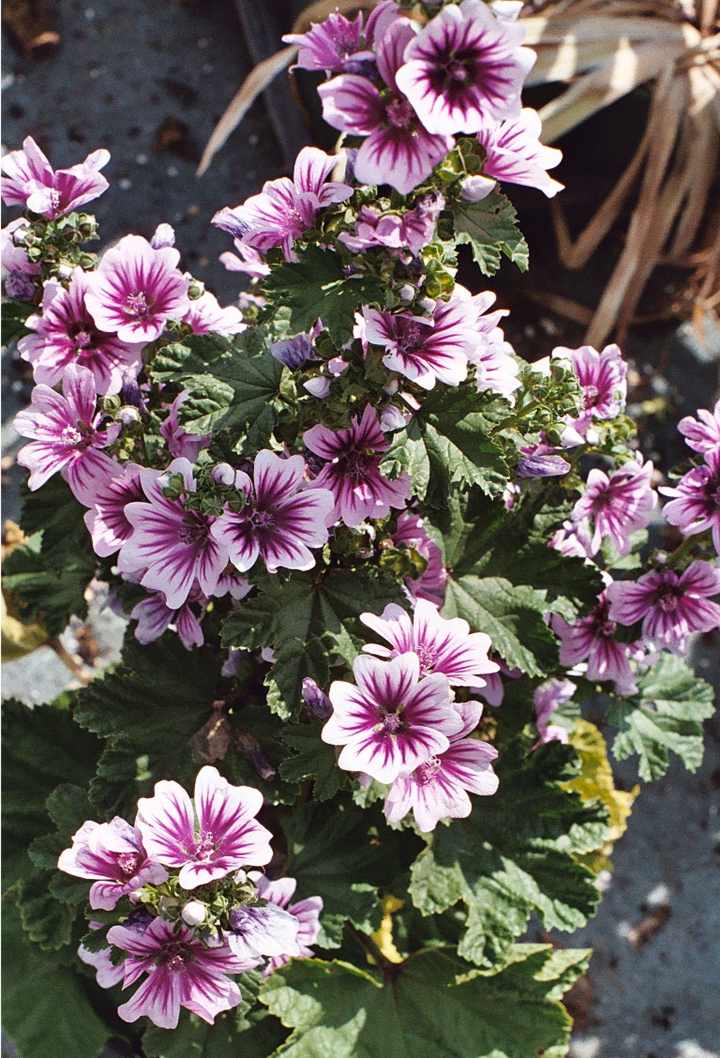
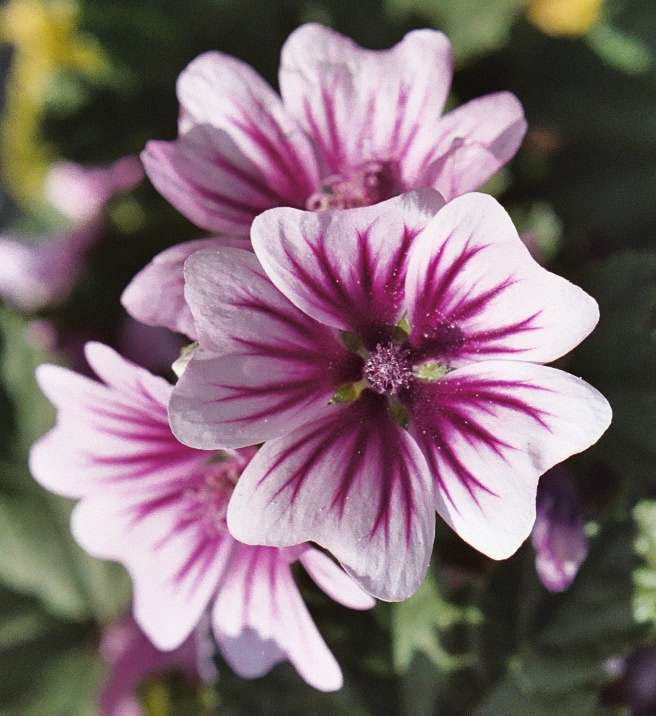
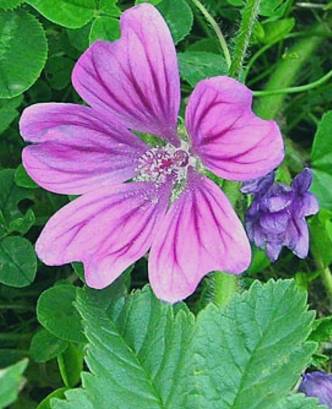
'ZEBRA MALLOW'. Clustered hollyhock-like flowers range from white to rosy purple, with dark purple veins, giving the petals a striped look. Hardy perennial often grown as an annual, to 3 - 4 feet. Blooms first year and from June to September in subsequent years. Europe. Zone 3. The flowers are edible and a nice addition to salads, and the young leaves are good in salads or boiled like greens. Nick seed, or give hot water treatment to germinate in 1 - 4 weeks.
MANDRAGORA (MAN-dra-GOR-a)
SOLANACEAE. Famous hardy stemless perennials of myth, magic and medicine. Good in the border or wild garden in well-drained soil and part shade.
Click for photo of seedling »
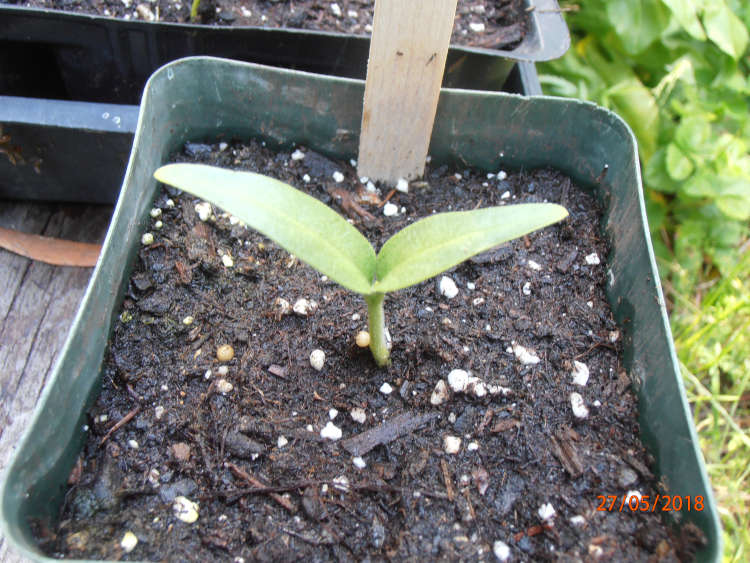
—Mandragora autumnalis. (10) MANDR-6. Packet: $7.00
100 seed: $50.00
Click for photo »

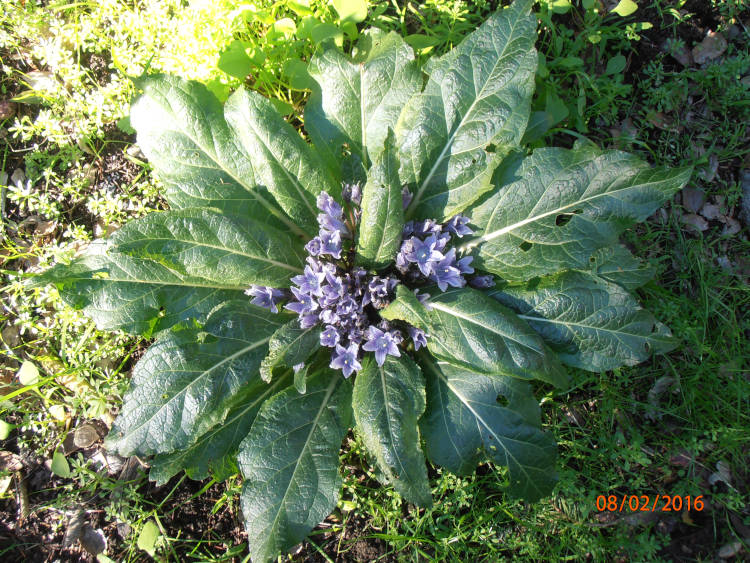
'AUTUMN MANDRAKE'. Bell-shaped purple 1 1/4" five-petaled flowers in spring, followed by oval orange to yellow berries. Hardy perennial forming rosettes of foot-long ruffled-edged leaves rising from a thick root. Mediterranean. Zone 5. Do not transplant the seedlings-sow in pots and plant out at the end of the first season. Stands rocky soil and drought. The roots were used in medicine like M. officinarum, and shared the wild mythology and magical uses surrounding 'mandragore' roots. Gives good germination in 2 - 8 weeks warm, higher with GA-3.
—Mandragora officinarum. (5) MANDR-18. Packet: $7.00
100 seed: $150.00 BULK OUT OF STOCK - packets are available
'MANDRAKE', 'DEVIL'S APPLES'. Bell shaped inch-long greenish to bluish flowers in spring, followed by yellow berries. Hardy perennial forming rosettes of foot-long leaves from a thick root. South Europe. Zone 6. Best in well-drained soil. Famous magical plant, variously considered a panacea or aphrodisiac, surrounded by folklore. Germinates in 1 - 3 months with GA-3.
—Mandragora turcomanica. (5 seed) MANDR-23. Packet: $15.00
Click for photo »
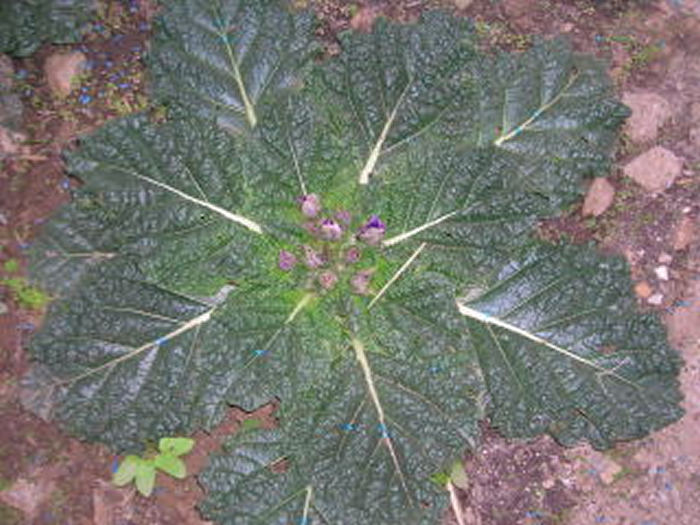
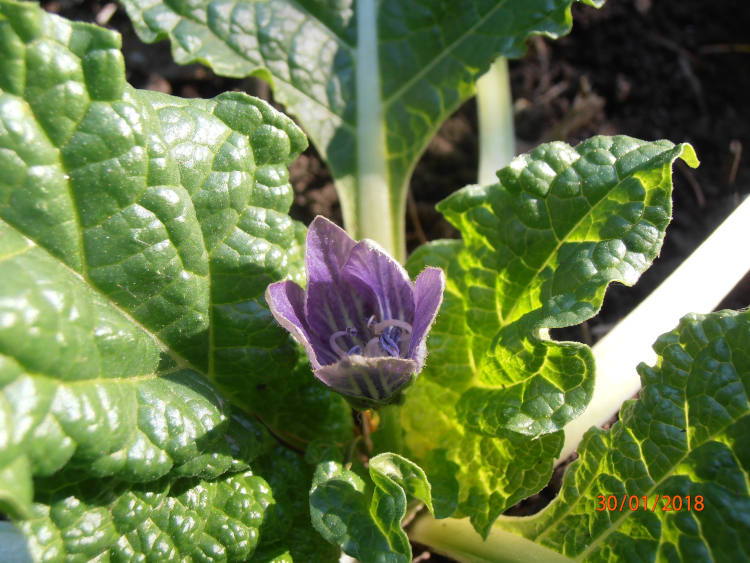
An extremely rare species, said to be possibly extinct in the wild, and fewer than 300 plants in cultivation. Large purple and cream bell-shaped flowers in the center of a rosette of large 1 - 2 foot crinkled leaves with white mid-ribs. Fruits like a yellow-orange tomato. Makes big rosettes 5 feet or more across, from a thick, branching, alkaloid-rich root. Originally native to only a small area of NE Iran and adjacent Turkmenistan, where local villagers would harvest them for medicine, or transplant them to gardens for the highly aromatic leaves and fruits. Some have proposed this as a source of 'soma', and it has been used as an aphrodisiac. Seed has been primed with GA-3, and will give good germination in 1 - 3 months or so.
MARRUBIUM (ma-ROO-bee-um)
LABIATAE. Bitter aromatic Eurasian perennials. Easy in poor, hot, dry soils and full sun. Germinates in 1 - 3 weeks, best at very warm temperatures.
—Marrubium supinum. (100) MARR-8. Packet: $2.50
Photos: http://calphotos.berkeley.edu/cgi/img_query?enlarge=0000+0000+1109+0348
http://www.florasilvestre.es/mediterranea/Lamiaceae/Marrubium_supinum.htm
'SCALLOP-SHELL'. Rosy-red flowers in short spikes in summer. Hardy perennial to 10", with woolly crinkled leaves. Mediterranean. Zone 5. Germinates in 1 - 2 weeks.
—Marrubium vulgare. (100) MARR-10. Packet: $2.50
5 grams: $12.00
'HOREHOUND'. White-woolly hardy perennial to 1 - 2 feet, with small crinkled leaves and white flowers in whorls. W. Asia and Mediterranean. Zone 3. Aromatic and bitter. Called 'Seed of Horus' by the ancient Egyptians, it has a long medicinal history, and horehound candy is a popular cold remedy. It contains a powerful anti-viral compound. Used to brew ale.
MATRICARIA (mat-ri-KAR-ee-a)
COMPOSITAE. 'MAYWEED'. Hardy annuals and perennials with finely cut foliage and a profusion of attractive daisy-like flowers. Widespread. Easily grown in almost any soil, preferring full sun. Nice for edging or in drifts. Sow where they are to stand. Barely cover. Germinates in 1 - 2 weeks. Seed viable 2 - 3 years. Blooms about 16 weeks from seed.
—Matricaria Chamomilla. (=recutita) (1000) MATI-2. Packet: $2.50
Ounce: $8.00
1/4 Pound: $24.00
'GERMAN CHAMOMILE'. White inch-wide daisies with yellow disks. Hardy sweet-scented annual to 2 1/2 feet with finely divided ferny foliage. Europe, W. Asia. Zone 4. Very popular for a pleasant, relaxing bedtime tea. The volatile oil has been used as a solvent in applying platinum to glass. Germinates in 1 - 2 weeks.
—Matricaria Chamomilla 'Zloty Lan'. (1000) MATI-2Z. Packet: $2.50
Gram: $6.00
'GERMAN CHAMOMILE'. High-yielding tetraploid cultivar with large white flowers. Excellent for herb production. Germinates in a week or two.
MATTHIOLA (ma-the-O-la)
CRUCIFERAE. 'STOCKS'. Deliciously scented, easily grown annuals and perennials, cottage garden favorites. Splendid plants valued for their greyish foliage topped with dense showy spikes of clove-scented bloom. Excellent for cut flowers. Likes deep moist soil in sun or part shade. Lovely winter pot plant. Sow on the surface as light helps germination, which takes 1 - 2 weeks at cool temperatures. Seed half life is 7 - 10 years.
—Matthiola bicornis. (=longipetala) (500) MATH-10. Packet: $2.00
Ounce: $6.00
1/4 Pound: $18.00
'EVENING-SCENTED STOCK', 'PERFUME PLANT'. Lilac-pink 3/4" flowers are closed during the day and open in the evening to scent the air with a powerful perfume. Hardy annual to 20" with narrow leaves. Greece. "Wonderfully fragrant."—Sunset. Plant beneath the bedroom window.
MELILOTUS (me-li-LO-tus)
LEGUMINOSAE. Fragrant clover-like herbs.
—Melilotus officinalis. (1000) MELT-18. Packet: $2.00
Ounce: $5.00
1/4 pound: $10.00
'YELLOW SWEET CLOVER'. Yellow flowers in dense 4" spikes. Nitrogen-fixing annual or biennial to 4 feet. Eurasia. Excellent soil improver, erosion control, forage, and bee plant, giving large amounts of honey. The sweetly aromatic foliage has many medicinal uses and for flavoring.
MELISSA (me-LISS-a)
LABIATAE. 'BALM'. Perennial herbs from Europe and Asia. Name comes from the Greek for 'bee', as bees are attracted to the plants. Sow after all danger of frost is past. Germinates in 1 - 2 weeks.
—Melissa officinalis. (250) MELS-1. Packet: $2.50
5 grams: $9.00
'LEMON BALM'. Strongly lemon-scented hardy perennial herb to 2 - 3 feet, forming large bushes in favorable climates. Zone 3. A good bee plant. The leaves are used in making potpourri, perfumes and tea. Use fresh or dry for tea and seasoning. Germinates in 1 - 2 weeks.
—Melissa officinalis Gold Leaf. (50) MELS-1G. Packet: $3.00
'GOLDEN LEMON BALM'. Striking golden and green foliage in spring, changing to light green. Golden color best in part shade. Germinates in 1 week.
MELOTHRIA (me-lo-THREE-a)
CUCURBITACEAE. Annual and perennial tendril-climbing vines grown for ornament. Start early indoors, germinates in about 5 - 10 days. Easy.
—Melothria scabra. (25) MELO-40. Packet: $2.50
Gram: $10.00
Egg shaped inch-long green and white striped or mottled fruits resembling tiny watermelons. Fast-growing annual with lobed leaves. México. Fruits are "...tasty and crunchy, used in salads or stir-fry."—Lacherez. They are pickled in México. Germinates in 1 - 2 weeks.
MENTHA (MEN-tha)
LABIATAE. 'MINT'. Easily grown tender perennial herbs grown for seasoning, medicine, aromatic oil and ornament. Sow seed in any good moist garden soil in spring. They spread by runners.
—Mentha requienii. (100) MENT-17. Packet: $2.50
1/4 gram: $20.00
Gram: $50.00
'CORSICAN MINT'. Moss-like mat-forming perennial ground cover with tiny, powerfully mint-scented leaves. Lilac or pink flowers. Corsica and Sardinia. Zone 6. Best with constant moisture and part shade. Used to make crème-de-menthe. Germinates in 1 - 2 weeks, best at under 75°F.
MENTZELIA (ment-ZE-lee-a)
LOASACEAE. N. and S. American plants grown for their showy flowers. Easy in light rich soil in sunny spots. Good in the border, wild garden, or pots, blooming June to October. Sow 1/8" deep outdoors in March and April, or in fall in warm regions. They bloom in about 10 weeks.
—Menzelia laevicaulis. (100) MENZ-7. Packet: $2.50
'BLAZING STARS'. Large light yellow 5-petaled star-like flowers to 4" across, with long stamens. Biennial to 2 - 3 1/2 feet, with narrow, wavy-edged 2 - 8" leaves and shining white stems. W. U.S. "Magnificent blossoms."—Parsons.
MERREMIA (me-RE-mee-a)
CONVOLVULACEAE. Twiners with bell or funnel-shaped morning glory-like flowers and divided or entire leaves. Mostly tropical, they are valued for their fast growth, attractive foliage, and some for ornamental pods or edible tubers. Easily grown in ordinary soil, the roots of the perennials can be stored over winter like Dahlias.
NEW—Merremia sibirica. (10) MERR-3. Packet: $2.50
Click for photo »

Pale pink 3/4" flowers on a vigorous vine to 20 feet. Long, heart-shaped leaves, 2 1/2" wide and 4 1/2" long, turning red in autumn. Reddish stems. Grown from seed from Beijing, China. Hardy annual. Nick seed to germinate in a week. Blooms in 3 months.
"It is certainly a profuse bloomer. I had three plants on a trellis, and it was not uncommon to see up to a hundred flowers each morning!"—E. Kniola.
"Really attracts pollinators here—butterflies, skippers, honeybees, bumble bees, and several kinds of wild bees swarm the plant."—S. Calkins.
METASEQUOIA (me-ta-se-KOY-a)
TAXODIACEAE. A single species.
—Metasequoia glyptostroboides. (75) META-1. Packet: $2.50
'DAWN REDWOOD'. Fast-growing deciduous tree to 160 feet, with trunk to 6 feet thick. Feathery pinnate foliage with orange and yellow fall color. China. Zone 5. Monoecious (separate male and female trees). First described from fossils and was thought to be extinct, living trees were discovered by Gan Duo, a forester. Considered critically-endangered in the wild, it is widely cultivated. Germinates in 2 - 6 weeks warm, often only 10%. Germination of this lot is quite good - 60%, tested 2/25.
MEUM (MAY-um)
UMBELLIFERAE. A single species.
—Meum athamanticum. (50) MEUM-4. Packet: $2.50
'SPIGNEL', 'BALDMONEY'. Umbels of white flowers in summer. Aromatic perennial to 1 - 2 feet, with feathery leaves. Europe. Zone 6. Best in well-drained soil. The spicy leaves are eaten as a condiment, and the roots eaten like parsnips. Prechill.
MICHAUXIA (mee-SHOW-ee-a)
CAMPANULACEAE. Robust Asian perennials.
—Michauxia tchihatchewii. (500) MICH-12. Packet: $2.50
Click for photo »
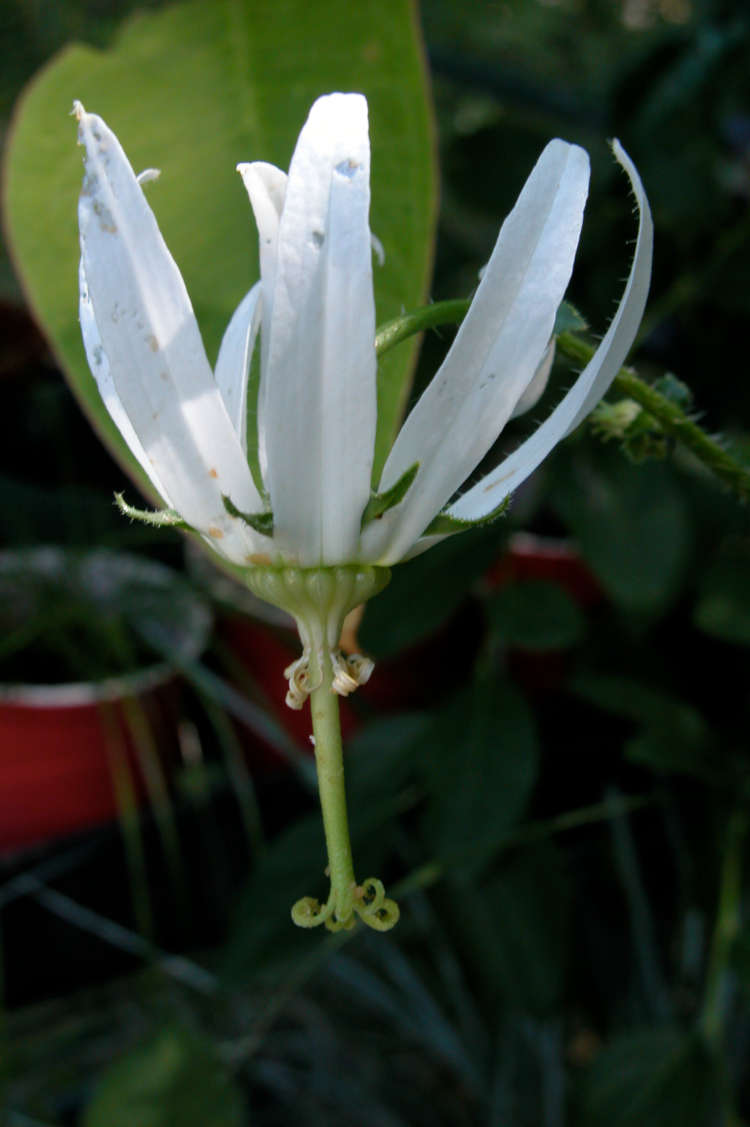
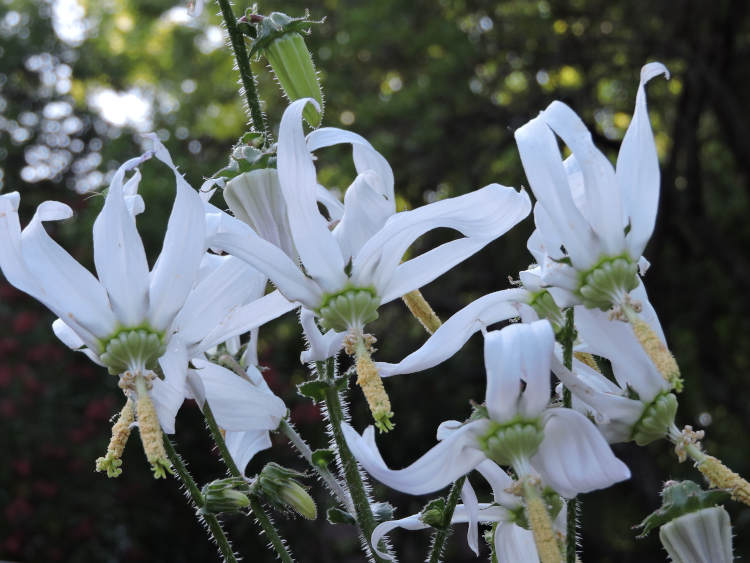


'CATHERINE WHEEL'. Large spikes of large nodding white flowers with narrow reflexed petals, in summer. Biennial or perennial to 4 - 6 feet. Turkey. Zone 7. Striking! Stands drought and poor clay soil. Germinates in 1 - 2 weeks warm.
MICROMERIA
LABIATAE. Aromatic perennial herbs.
—Micromeria thymifolia. (100) MICO-24. Packet: $2.50
'MOUNTAIN MINT'. White flowers with violet in dense clusters in summer and fall. Perennial to 10" or so, with aromatic foliage. South Europe. Zone 5 or 6. Germinates best with a prechill.
MIMOSA (mi-MO-sa)
LEGUMINOSAE. Warm region herbs, shrubs and trees grown for their showy, puff-like flowers and attractive feathery foliage. They make lovely specimens in the greenhouse or outdoors in California and the South. Nick seed to germinate in 1 - 3 weeks at warm temperatures. Grow like Acacia.
—Mimosa pudica. (50) MIMO-7. Packet: $2.50
Ounce: $7.50
'SENSITIVE PLANT'. Lavender puff-like flowers and feathery pinnate foliage which closes quickly at a touch. Shrub to 3 feet. Tropical America. Easily grown as an annual. Movement best at warm temperatures. Pop seed out of husk, nick, germinates in 1 - 3 weeks. This lot is de-husked.
MIMULUS (MIM-you-lus)
SCROPHULARIACEAE. 'MONKEY-FLOWER'. Popular annuals and perennials grown for their showy tubular flowers. They prefer a moist soil and part shade, and are excellent for naturalizing in woodlands. They smother themselves in summer with their vivid, often spotted flowers, which, seen at the right angle may resemble a monkey's face. Sow from January to April indoors or April - June where they are to stand. Excellent floriferous pot plants. Sow on the surface, germinates in 1 - 4 weeks warm.
—Mimulus Lewisii. (1000) MIM-25. Packet: $2.50
Click for photo »
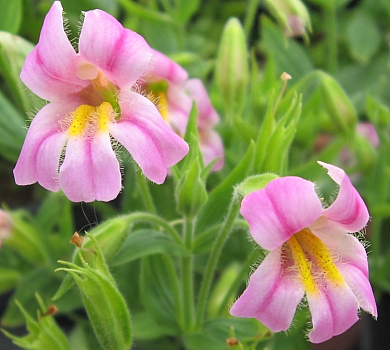
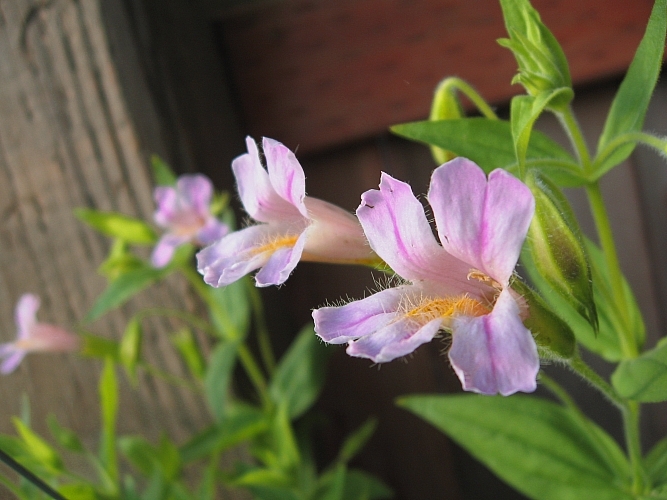
Bright pink to rosy-red 2" flowers. Perennial to 2 1/2 feet, with 3" leaves. W. North America. Prefers shady places and should be extremely hardy. Forms large clumps. Germinates in 1 - 4 weeks warm.
"Sometimes, there are no answers."—J.L.H.
MINA (MEE-na or MY-na)
CONVOLVULACEAE. A single species. Easily grown.
—Mina lobata 'Exotic Love'. (=Ipomoea lobata) (10) MINA-1EL. Packet: $3.00
10 grams: $7.50
25 grams: $13.00 (about 50 seed per gram)
Unusual rich crimson 3/4" flower buds fading through orange to yellow, in curved, one-sided spikes. Each spike may have up to 12 flowers in various stages of development, producing a striking effect. Strong climbing vine to 15 - 20 feet, with 3-lobed leaves. México. Good in pots and hanging baskets. "It is a very free bloomer, and deservedly popular."—H. D. House. Nick seed to germinate in 1 - 2 weeks.
MIRABILIS (mi-RA-bil-is)
NYCTAGINACEAE. Showy tuberous-rooted perennials from the warm regions of the Americas, grown as annuals in the North. The name means 'admirable'. Best in a sunny spot. Easy from seed. They are wonderful old-fashioned favorites. In cold climates the roots may be dug and wintered like dahlias.
—Mirabilis Jalapa Mixed. (50) MIRA-6. Packet: $1.50
Ounce: $5.00
1/4 Pound: $10.00
'FOUR-O'CLOCK', 'MARVEL-OF-PERU'. Fragrant, trumpet-shaped 1 - 2" flowers in bright shades of red, magenta, pink, yellow, and white, sometimes striped and blotched. Showy, profusely-blooming tender perennial to 3 feet, with deep green 2 - 6" leaves, forming an attractive mound of bloom. Tropical America. Long tuberous roots may reach 40 pounds in warm climates. Grow as an annual in the North, or lift tubers like dahlias. The fragrance is said to drive away mosquitoes, and the flowers are used as food coloring in China. An old-fashioned favorite, cultivated since 1596. 'Jalapa' is a Mexican town, pronounced ha-LA-pa. Germinates in 1 - 4 weeks.
—Mirabilis Jalapa 'Broken Colors'. (25) MIRA-6B. Packet: $2.00
Ounce: $5.00
1/4 pound: $10.00
Click for photo »

Striking 2" flowers in pink, red, yellow, and white, striped and mottled with dark pink or red. Fragrant.
—Mirabilis Jalapa 'California Wild Magenta'. (25) MIRA-6C. Packet: $2.50
Click for photo »
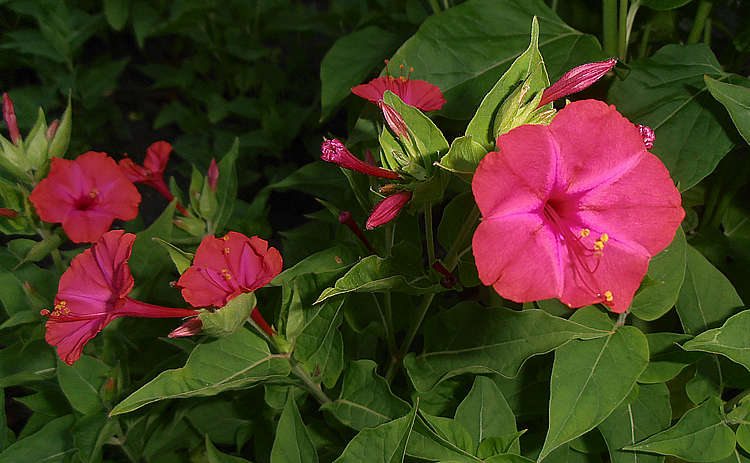
Clear magenta flowers abundantly produced on a bushy tender perennial to 3 feet. This type is found growing wild in waste places in California. One of the first plants I grew as a boy, after nearly 60 years they still come up in my mom's garden, where I collected this seed. Germinates in 1 - 2 weeks.
—Mirabilis Jalapa White. (50) MIRA-6W. Packet: $1.50
Ounce: $5.00
1/4 Pound: $10.00
—Mirabilis longiflora. (10) MIRA-14. Packet: $4.00
Click for photo »
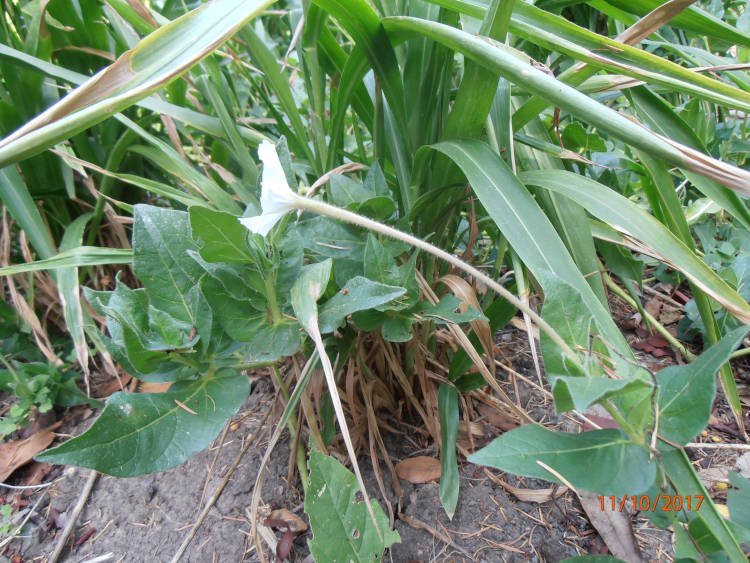
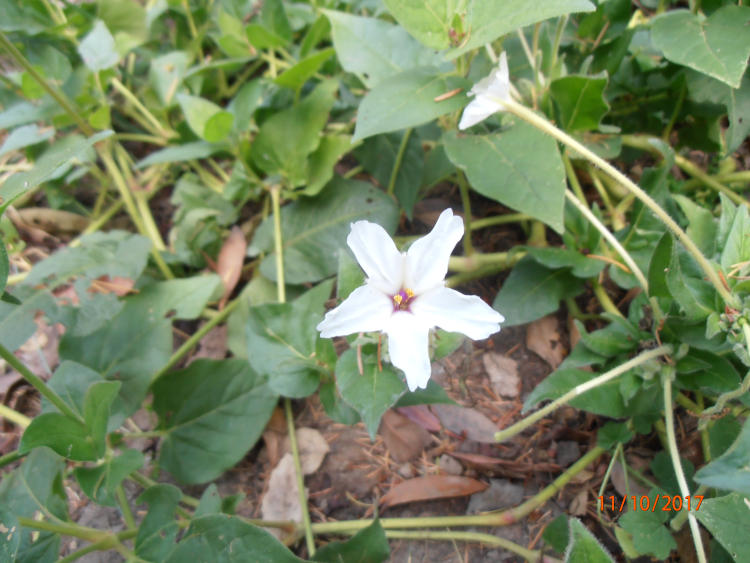
'SWEET FOUR O'CLOCK'. White flowers with a long 4 - 6" tube, red throat, and starry end. Bushy perennial to 3 feet, with 3 - 4" leaves. West Texas to México. Zone 8. "On calm, warm summer nights they fill the air with a wonderful fragrance."—Wilamowski. Germinates in 1 - 2 weeks.
"Ignorance is preferable to error, and he is less remote from the truth who believes nothing, than he who believes what is wrong."—Thomas Jefferson.
MONARDA (mo-NAR-da)
LABIATAE. Aromatic perennial and annual herbs, some with showy scarlet or purple blooms. Good in masses in a sunny border. Easy culture, will thrive in any good soil. Divide in spring; plants disturbed in fall often die in winter. Sow on the surface, germinates in 1 - 4 weeks. Cool temperatures help some.
—Monarda didyma 'Panorama'. (100) MOND-3X. Packet: $3.00
'BERGAMOT', 'BEE BALM', 'OSWEGO TEA'. Highly aromatic herb with showy scarlet, purple or pink flowers in starry whorls. To 2 feet. Zone 4. The fragrant leaves are used alone as a tea, or are mixed with black tea as flavoring. Excellent bee plant. Stunning when flowering. Likes moist soil.
—Monarda fistulosa. (1000) MOND-9. Packet: $2.50
5 Grams: $12.00
'WILD BERGAMOT'. Lilac 1 1/2" flowers in clusters with colored bracts. Hardy perennial to 2 - 5 feet, with 4" leaves. N. America. Zone 4. The strongly fragrant leaves were used when cooking meat, and were chewed by the Indians. They make a pleasant aromatic tea. The volatile oil is over 50% carvacrol. Germinates in 1 - 3 weeks, with stragglers to 5 months.
—Monarda punctata. (500) MOND-15. Packet: $2.50
5 Grams: $10.00
'SPOTTED BEEBALM'. Inch-long yellow flowers spotted with purple, in dense wheel-like whorls, surrounded by purple-pink bracts. Hardy perennial to 3 feet, with narrow 3" leaves. E. U.S. Zone 4. The dried seedheads are attractive. A strongly aromatic and flavorful herb with a thyme-like scent. Germinates in 2 - 3 weeks.
MORINDA (mo-RIN-da)
RUBIACEAE. Tropical trees and shrubs.
NEW—Morinda citrifolia. (25) MORI-8. Packet: $2.50
10 grams: $10.00 BULK OUT OF STOCK - packets are still available
'NONI', 'INDIAN MULBERRY'. Starry white 1/2" flowers in clusters, followed by knobby 2" fruits. Small fast-growing tree to 20 feet, with large shiny leaves. SE Asia and Pacific. Zone 10. Bears in 18 months, giving 8 - 17 pounds of fruit per month, year round. Fruits eaten cooked or juiced, and used medicinally as a panacea. Some evidence of anticancer activity. Young leaves eaten. Stands salt spray at seaside. Seed needs warmth to germinate in 6 - 12 months, clipping the tip of the wing helps. Generally has low germination.
MORINGA (mor-RIN-ga)
MORINGACEAE. Interesting and useful tropical trees of semi-arid regions of Asia and Africa. Easily grown in warm areas of the U.S. or in the greenhouse. Easy from seed.
NEW—Moringa pterygosperma. (=Moringa oleifera) (10) MORG-16. Packet: $2.50
Ounce: $9.00 (about 150 seeds per ounce)
1/4 pound $25.00 BULK OUT OF STOCK - packets are still available
Click for photos »


'HORSERADISH TREE', 'SAJAN'. Clustered, inch-wide, fragrant, oddly-shaped flowers followed by 12 - 18" pods. Tripinnate leaves. India. Zone 10. Valuable multi-use tree. Leaves eaten boiled or fried, and are especially rich in the sulfur-bearing amino acids methionine and cystine, which balance bean protein, and in vitamin A; planted to prevent deficiency-blindness. Young pods called 'drumsticks', eaten cooked or pickled. Seeds yield a fine edible oil (ben oil), also used by watchmakers. The roots have a horseradish flavor and are used as a condiment. Germinates in 2 - 4 weeks.
"Coercion is the least efficient means of obtaining order."—U. K. LeGuin.
MUCUNA (mu-KU-na)
LEGUMINOSAE. Showy tropical vines grown for ornament, soil building and cattle forage. Some are among the most brilliant and dramatic of the world's plants. Frost tender, good in the far South and in the greenhouse, some blooming and maturing seed as far north as Maryland and Kansas. Easy from seed in most soils, sprouts quickly. Some are bat-pollinated.
—Mucuna sempervirens. (5) MUCU-76. Packet: $5.00
Photo: http://treeflower.la.coocan.jp/Fabaceae/Mucuna%20sempervirens/Mucuna%20sempervirens.htm
'SEA BEAN', 'TOBI-KAZURA' (Japanese name meaning 'flying vine'). Purple-black to red-yellow 3" waxy flowers in 8" clusters in spring, followed by 12" pods. Large evergreen tropical climber to 40 feet, with trifoliate 5" leaves. China. Zone 10. Nick and soak seed to germinate in 1 - 2 months.
MYRICA (MIR-i-ka)
MYRICACEAE. 'WAX MYRTLE'. Ornamental shrubs and small trees with nitrogen fixing bacteria. Grown for ornament, fruits, fragrant wax and medicine. Good soil builders in sandy sterile areas. Seed of temperate-zone kinds germinate after 3 months cold treatment. GA-3 at 500ppm helps the germination of de-waxed seed.
—Myrica californica. (25) MYRI-6. Packet: $2.50
'CALIFORNIA BAYBERRY'. Glossy dark green leaves on an evergreen shrub or small tree to 10 - 30 feet, with deep purple waxy berries. Coastal western U.S. Zone 7. "One of the best-looking native plants."—Sunset. Rub wax off seed to germinate in 3 - 7 months, with stragglers up to 18 months. A prechill and GA-3 also help.
MYRRHIS (MIR-is )
UMBELLIFERAE. A single species.
—Myrrhis odorata. (25) MYRR-1. Packet: $3.50
1/4 Ounce: $7.50
Ounce: $16.00
'SWEET CICELY', 'MYRRH'. Sweet-scented, lacy, fern-like foliage and large umbels of white flowers on 2 - 3 foot stems. Europe. Zone 4. The fragrant foliage has a sweet taste and is used as a potherb, in salads, to flavor vinegar, etc. "The leaves taste as if sugar had been sprinkled over them."—Grieve. The roots are eaten in salads or boiled. The chopped green seeds are eaten as flavoring. Plant out 2 feet apart. Will produce for many years. Seed best sown in fall to germinate in spring. If sown in spring, give at least 2 - 4 months cold treatment, and best to freeze a few times during this. Will then germinate in 1 - 3 months. It is absolutely a myth that the seed is only viable a few weeks; it just goes into deep dormancy if not sown right off the plant. I've had high germination from seed one and two years old, and D. Downs reports 3 years.