COMPOSITAE. A single species. Easily grown.
—Cnicus benedictus. (25) CNIC-1. Packet: $2.50
10 Grams: $15.00
'BLESSED THISTLE'. Bright yellow inch-wide flowers on a hardy, thistle-like annual to 2 feet, with attractively marbled leaves. Blooms summer and fall. Mediterranean. Once highly valued medicinally as a panacea for everything from "the bitings of mad dogs" to migraine and gout. Contains anti-HIV compounds. An excellent tonic, said to improve the memory. "...lay it to your heart; it is the only thing for qualm... plain Holy Thistle."—Shakespeare. Used in Benedictine, and the seeds yield an oil. Germinates in 1 - 3 weeks warm.
COBAEA (ko-BAY-a)
POLEMONIACEAE. Rampant vining shrubs grown for their large, bell-shaped violet or white flowers. Easily grown outdoors as annuals, or in the greenhouse. Rich, moist, well-drained soil in full sun or light shade. Plant seed edgewise indoors in 4" pots, or outdoors when soil is warm. Germinates in 1 - 3 weeks and flowers in 12 weeks. Viable 4 years or more.
—Cobaea scandens. (10) COBA-2. Packet: $2.50
10 grams: $7.50
25 grams: $12.00
100 grams: $40.00
'CATHEDRAL BELLS', 'CUP AND SAUCER VINE'. Large, bell-shaped purple 2" long flowers open green, then darken, from June to October. Fast growing vine to 25 feet, with dark green leaves. México. Zone 9. An old-fashioned garden favorite.
CODONOPSIS (co-do-NOP-sis)
CAMPANULACEAE. East Asian often twining perennials grown for their attractive bell-shaped flowers. Some need winter protection in the North. Best in well-drained soil; grow like Campanula.
—Codonopsis ovata. (100) COD-18. Packet: $2.50
'KASHMIR BELLFLOWER'. Pale blue nodding flowers with darker veins, in summer. Himalayas. Zone 3 or 4. Germinates in 2 - 4 weeks.
—Codonopsis pilosula. (50) COD-20. Packet: $2.50
'TANG SHEN'. Large pale blue to greenish inch long bell-shaped flowers flushed purple at the base. Hardy perennial twiner to 6 feet, with 1 1/2" leaves. NE Asia. The thick roots are an important 'Qi tonic' in Chinese medicine, placed in the same class as ginseng, astragalus, and eleuthero. Germinates in 1 - 2 weeks.
COFFEA (ka-FEE-a)
RUBIACEAE. Evergreen African and Asian shrubs. They make nice, fast-growing foliage plants in the greenhouse.
—Coffea arabica. (25) COFF-1. Packet: $2.50
Ounce: $7.50 (130 seeds per ounce)
Click for photo »

'COFFEE'. Fragrant white flowers and red berries and handsome, shining, dark green 6" oval leaves on a shrub to 15 feet. East Africa. Zone 10. Roasted seeds are coffee, and the leaves, bark and fruit pulp are also made into drinks. Honey from the flowers has a unique flavor. Soak overnight, peel off husk, sow in a light rich soil, and keep warm but not too wet. Root germinates in 1 - 4 months.
COIX (KO-ix or KOY)
GRAMINEAE. Tall ornamental tropical grasses grown for their bead-like seeds. Easily grown in rich sandy, well-drained soil, in full sun or light shade. Start very early in pots, as it needs a long season. Germinates in 2 - 8 weeks. Seed viable 5 years or more.
—Coix Lacryma-Jobi. (10) COIX-1. Packet: $2.50
Ounce: $10.00
1/4 Pound: $30.00
Click for photo »
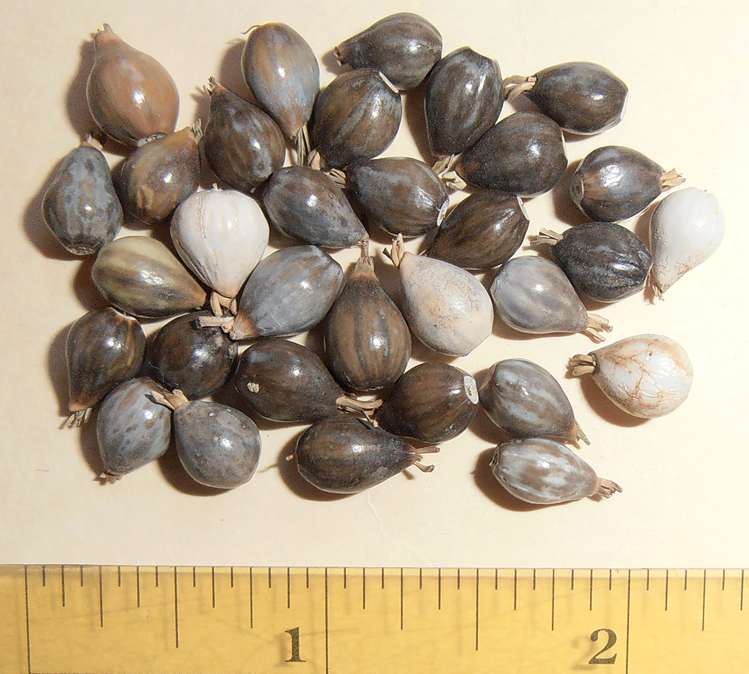
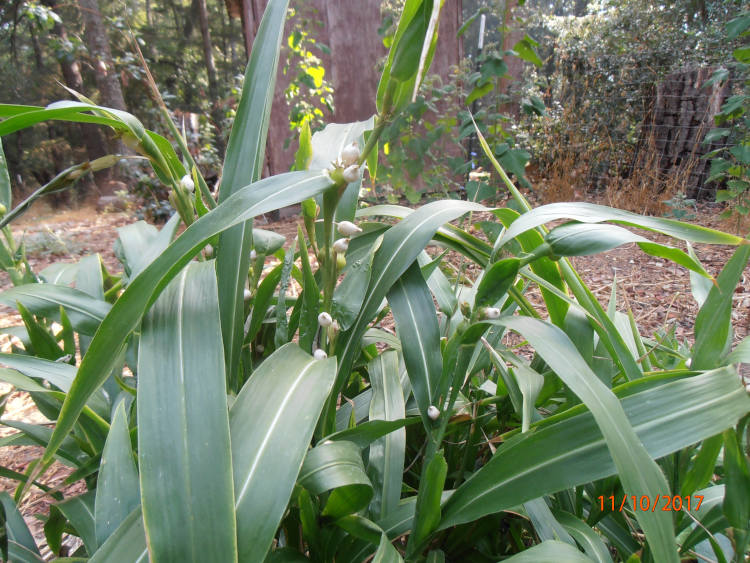
'JOB'S TEARS'. To 3 - 6 feet, with reed-like 1 1/2" wide leaves, bearing unusual, teardrop-shaped, bead-like seeds ranging from pearly white to shiny grey. Tropical Asia. Tender perennial grown as an annual. Plant out May 1st in Zone 5. Cut stems for dried arrangements before seeds fall. The seeds are widely used as beads in rosaries, etc., to which marvelous properties are attributed. They are edible and are ground for bread and made into beer.
COLCHICUM (KOL-chi-kum)
LILIACEAE. Crocus-like cormous perennials from the Mediterranean and Central Asia, most blooming in late summer and fall, after the narrow leaves wither. Good in full sun. "Colchicums are most charming and interesting plants of easy culture."—L.H. Bailey. Seed often slow to germinate.
—Colchicum autumnale. (50) COLC-2. Packet: $2.50
'AUTUMN CROCUS', 'MEADOW SAFFRON'. Showy purple or white flowers to 4" across, blooming in autumn. Hardy perennial with narrow, foot-long leaves. Europe. Zone 5. The corms and seeds are the source of colchicine, used in the treatment of gout and to induce chromosome doubling in plant breeding. Give seed warm/cold/warm, and seedlings will straggle in over 1 - 3 years.
COLLINSIA (ko-LIN-see-a)
SCROPHULARIACEAE. Showy and free-flowering hardy annuals, mostly from California and western North America. Easily grown and much used in borders, bedding and for edging. Will bloom mid-summer till frost with succession sowings. Best in well-drained soil and they stand part shade. Sow seed in spring or fall, 1/4" deep, to germinate in about 14 days. They make long-lasting cut flowers.
—Collinsia heterophylla. (=bicolor) (1000) COLL-3. Packet: $1.50
Ounce: $6.00
1/4 Pound: $14.00
Click for photo »
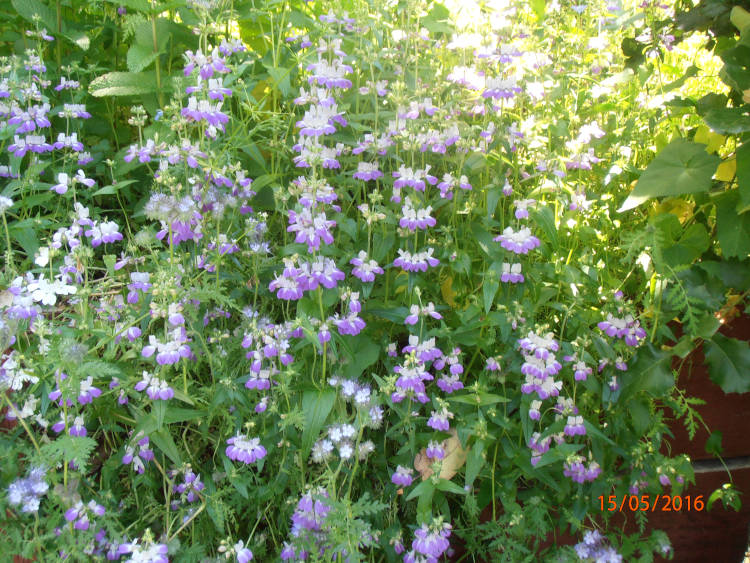
'CHINESE HOUSES', 'INNOCENCE'. Large, inch-long flowers in stacked whorls, resembling a pagoda in form, with a white upper lip, and a rosy purple lower lip. Hardy annual to 1 - 2 feet, with slender stems. California. Sow thinly in groups. Best in part shade Germinates in 1 - 2 weeks at cool temperatures.
COLLOMIA ko-LO-mee-a)
POLEMONIACEAE. Showy American Gilia-like plants.
—Collomia grandiflora. (200) COL-10. Packet: $2.50
5 grams: $7.50 BULK OUT OF STOCK - packets are still available
Trumpet-shaped white to salmon inch-long flowers in dense balls. Annual to 3 feet, with narrow leaves. W. U.S. Germinates in 2 - 4 weeks at cold temperatures.
"The means are the end."—U. K. LeGuin.
CONVOLVULUS (kon-VOLV-you-lus)
CONVOLVULACEAE. 'GLORY BIND'. Showy twining vines or upright herbs grown for their funnel-shaped morning-glory-like flowers. Easily grown in most soils and full sun with little care. Free flowering and good for covering fences or allowed to clamber among shrubs, the bushy types in the flower and rock garden. Some are excellent in hanging baskets. Vigorous growers, only a few are invasive or weedy. Soak seed till swollen, nick if needed. Sow in early spring 1/4" deep, to germinate in about 5 - 14 days at 60 - 65°F. The hardy perennials may be sown in September for early flowers. Many are medicinal. Seed has grown well up to 26 years old.
Convolvulus tricolor Varieties:
'DWARF MORNING GLORY'. Beautiful and floriferous hardy annual in various colors. Upright and bushy, forming a mound about a foot tall and 2 feet wide, with the showy 1 1/2" wide flowers borne in profusion above the narrow leaves. Good in hanging baskets. Blooms continuously all summer. S. Europe. Cultivated since 1629. "A splendid plant for the border."—Booth. Soak seed, nick unswollen ones. Germinates in 1 - 4 weeks at warm temperatures.
—Convolvulus tricolor 'Blue Flash'. (250) CONV-22B. Packet: $2.00
25 grams: $7.50
100 grams: $14.00
Light or deep blue flowers with white center and yellow eye. Dwarf compact plants to 6" or so. Germinates in 1 - 3 weeks.
CORALLOCARPUS (ko-ra-lo-KAR-pus)
CUCURBITACEAE. Tuberous tropical perennials.
—Corallocarpus welwitschii. (10) CORA-26. Packet: $2.50
'!OAQUA!A'I' (Namibian name). Caudex-forming monoecious vine to 6 feet, with pale yellow flowers followed by small red fruits. Ashy grey to green leaves. Southern Africa. Prized by caudex collectors. Germinates in 1 - 2 weeks.
COREOPSIS (ko-ree-OP-sis)
COMPOSITAE. Hardy North American annuals and perennials grown for their showy flowers. The annuals were formerly classed as Calliopsis. Beautiful in the border, rock garden and for bedding. They make a fine display in any garden soil in sun. Tolerates smog and poor soil. Makes good cut flowers. Sow outdoors from early spring to fall, on the surface to 1/4" deep, to germinate in 1 - 4 weeks, depending on temperature. Succession sowings from March to June will provide continuous bloom. Often self-sows. Seed viable 3 - 8 years or more.
—Coreopsis tinctoria 'Dwarf Red'. (1000) CORE-6DR. Packet: $2.00
Ounce: $6.00
1/4 Pound: $18.00
'DWARF RED PLAINS COREPSIS'. Bright red flowers on dwarf plants. Hardy annual. Good in meadows and for naturalizing. Germinates in 1 - 2 weeks.
—Coreopsis tinctoria Tall. (1000) CORE-6T. Packet: $1.50
Ounce: $6.00
1/4 Pound: $15.00
'TALL PLAINS COREOPSIS'. Vivid single yellow flowers with wine-red centers. Hardy annual to 3 feet. SW U.S. Excellent for naturalizing along roadsides, in meadows, etc. Stands poor dry soil and part shade, blooming abundantly in summer and fall, reseeding readily. Germinates in 1 - 2 weeks warm.
CORIANDRUM (ko-ree-AN-drum)
UMBELLIFERAE. Easily grown aromatic annuals grown in the herb garden for their flavorful leaves and seeds. Sow where they are to grow, 1/4" deep, to germinate in 1 - 2 weeks. Sow in fall in the South, early spring in the North. Seed viable 6 - 8 years.
—Coriandrum sativum. (100) CORI-5. Packet: $2.00
Ounce: $5.00
1/4 Pound: $9.00
'CORIANDER', 'CILANTRO'. Annual herb to 1 - 3 feet, with divided leaves and small white or pinkish flowers in umbels, followed by clusters of round aromatic seed. S. Europe. Cultivated since ancient times, the seeds have been found in Egyptian tombs, and they are mentioned by Pliny, Cato, Palladius, and Hippocrates. The young leaves are picked at any time for use in salads, soups, etc. They are very popular in Latin America and China. The ripe seed are used for flavoring breads and cakes, liqueurs, curries, etc. Little clusters coated with sugar were a favorite treat of children. In China they were believed to confer immortality. Harvest the seed clusters when they begin to turn brown. Their flavor improves with age. The roots are powdered for seasoning by Southwest Indians.
—Coriandrum sativum 'Long Standing'. (100) CORI-5LS. Packet: $2.00
Ounce: $5.00
1/4 Pound: $9.00
'CILANTRO CORIANDER'. This variety is slow to bolt, making it the best for leaf production. Gives a longer season of harvest of the spicy leaves, which are used in Latin American and Asian dishes.
—Coriandrum sativum 'Typ Dwarf Lemon'. (50) CORI-5T. Packet: $2.50
10 grams: $7.50
'LEMON CORIANDER'. Lemony scent in both leaves and seed. Compact, early blooming, fast fruiting. White to soft pink flowers. EU Organic.
"You've got to read between the lies."—J.L.H.
CORNUS (KOR-nus)
CORNACEAE. Well-known ornamental shrubs and small trees with handsome foliage, flowers, and fruits. They include some of our most striking native trees, often with brilliant fall color. Good in both sun and shade, easy in almost any soil. The name 'dogwood' is said to come from the use of a bark tea to wash mangy dogs in old England, though children enjoy being told 'its because of their bark'. Sow in fall; often germinates the second spring. Or try giving 60 days warm, then 60 -120 days cold, or nick seed then give cold. Summer sowing often works, for germination the next spring. Seed viable 2 - 4 years, but is best fresh.
—Cornus florida. (25) CORS-17. Packet: $2.50
1/4 Ounce: $7.50
Ounce: $18.00
'FLOWERING DOGWOOD'. White 2 - 4" flowers in late spring, followed by scarlet fruits that last into winter. Small tree to 20 - 40 feet, with oval 6" leaves that turn glowing red in fall. E. U.S. Zone 5. Fruits attract birds, and the hard wood is used for tool handles. Medicinal.
CORYDALIS (ko-RID-a-lis or ko-ree-DAL-is)
PAPAVERACEAE (formerly FUMARIACEAE). Easily grown mostly hardy perennials and some annuals, freely blooming in poor soil and full sun or part shade. Some slow to germinate and best sown in fall, the annuals best sown in spring or fall.
—Corydalis sempervirens. (50) CORY-27. Packet: $2.50
Gram: $7.50
5 grams: $15.00
Click for photo »
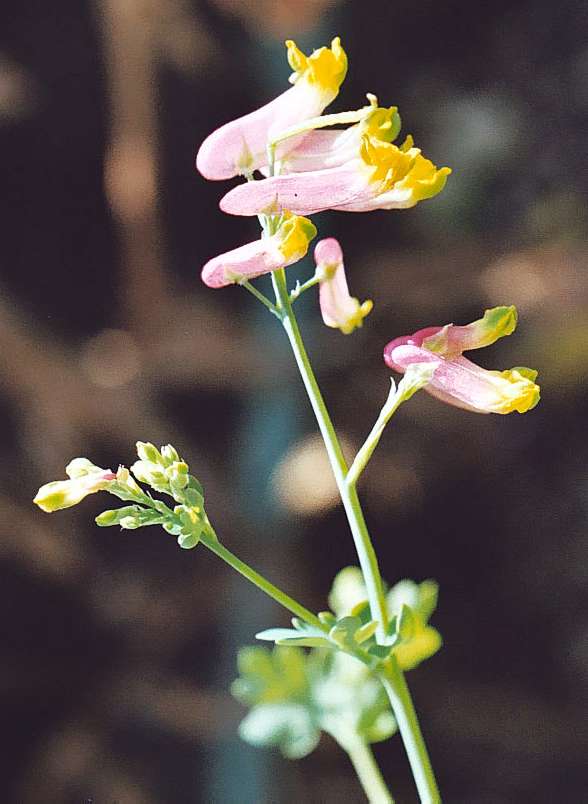
'ROCK HARLEQUIN', 'ROMAN WORMWOOD' (Note: This is not the true Roman Wormwood, which is Artemisia pontica). Pink to purple 3/4" yellow-tipped, short-spurred flowers in spikes. Attractive annual or biennial to 2 feet. Space 9". E. U.S. Zone 5. About 1/3 germinate readily in 2 - 4 weeks without pre-treatment, the rest are dormant and need cold. Gives high germination in 3 - 4 weeks with GA-3. Seed several years old germinates readily.
COSMOS (KOZ-mos)
COMPOSITAE. 'MEXICAN ASTER'. Showy, easily grown annuals and perennials planted for their graceful, feathery foliage and abundant mid-summer to fall bloom. Best in poor dry soil, as rich soil will give abundant growth, but little bloom. Sow outdoors after danger of frost or for early bloom, sow indoors 6 weeks earlier. Germinates in 1 - 2 weeks. Good cut flowers if picked when first opened. Seed viable 6 years or more. Old garden favorites.
Cosmos bipinnatus Varieties:
Showy annual to 2 - 10 feet, with feathery foliage and large daisy-like 2 - 6" wide flowers in shades of red, rose, white and pink. Cultivated since 1799. México. The 'Sensation' strain are about 4 feet tall, early blooming, with large, single 4 - 6" flowers.
NEW—Cosmos bipinnatus 'Apricotta'. (100) COS-1AP. Packet: $2.50
1/4 Ounce: $7.50 BULK OUT OF STOCK - packets are still available.
Ounce: $20.00 BULK OUT OF STOCK - packets are still available.
Apricot-rose and pink 3" blooms on long stems. Fleuroselect winner in 2021. Nice!
—Cosmos bipinnatus 'Candy Stripe'. (50) COS-1CS. Packet: $2.00
Ounce: $5.00
1/4 Pound: $15.00
Click for photos »

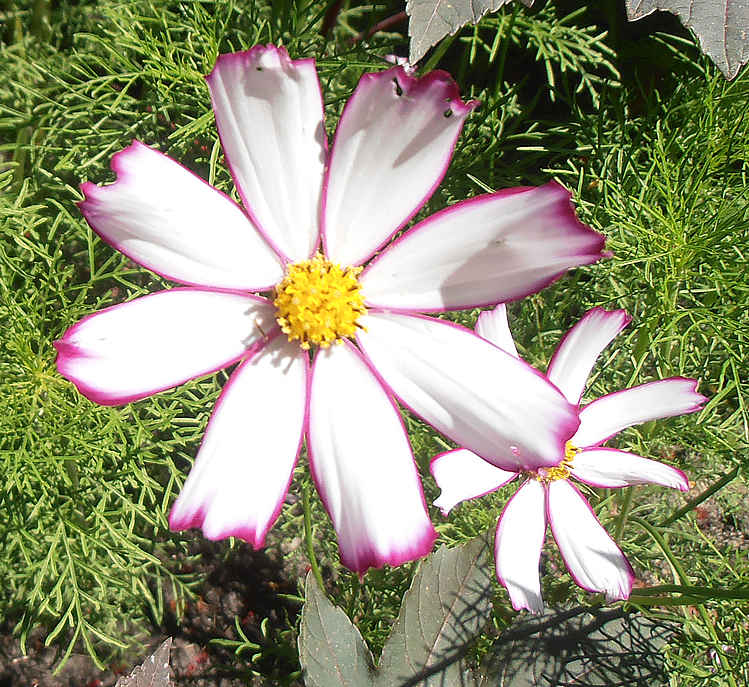
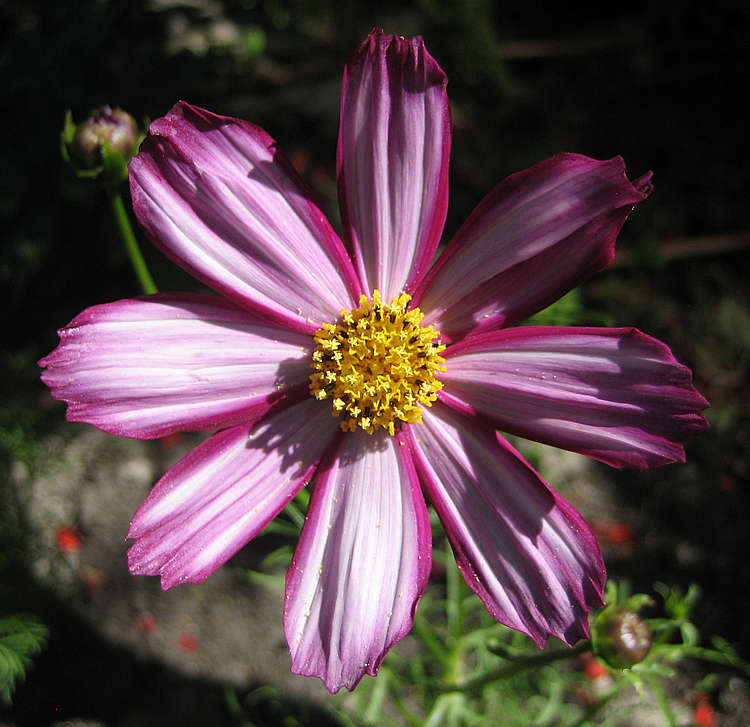
White, rose and red flowers with petals edged and striped darker. Germinates in 1 - 2 weeks.
—Cosmos bipinnatus 'Daydream'. (250) COS-1DY. Packet: $2.00
Ounce: $5.00
1/4 Pound: $15.00
Click for photos »

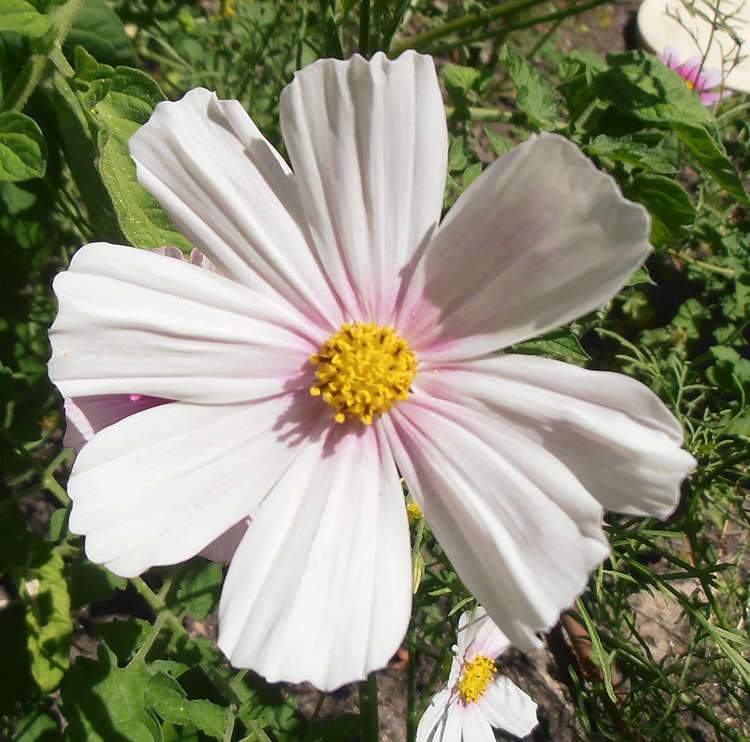
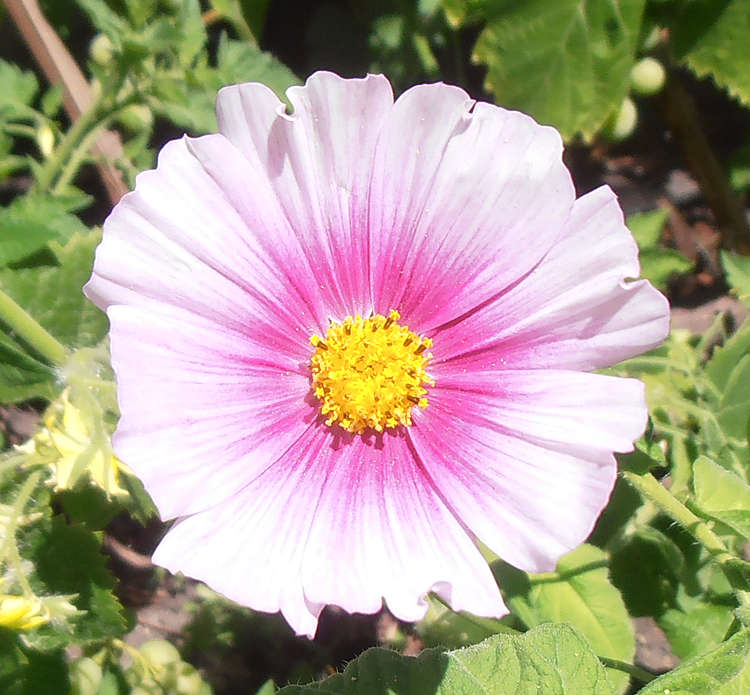
Pale pink flowers shading to deeper rose at the center. Good for cutting. Hardy annual to 3 - 5 feet.
—Cosmos bipinnatus 'Picotee'. (500) COS-1PC. Packet: $2.00
Ounce: $5.00
1/4 Pound: $15.00
White flowers with petals edged red, ranging to pure red. Nice. Germinates in 1 - 2 weeks.
—Cosmos bipinnatus 'Sea Shells Mixture'. (100) COS-1SS. Packet: $2.00
Ounce: $5.00
1/4 Pound: $15.00
Striking flowers with each petal (ray-flower) tubular, resembling a foxglove flower. Shades of white, pink and red. Unusual. Germinates in 1 - 2 weeks.
—Cosmos bipinnatus 'Sensation Purity'. (100) COS-1W. Packet: $2.00
Ounce: $6.00
1/4 Pound: $15.00
A wonderful, large-flowered snowy white.
—Cosmos bipinnatus 'Sensation Radiance'. (100) COS-1R. Packet: $2.00
Ounce: $6.00
1/4 Pound: $15.00
Deep rose with a crimson zone.
Cosmos sulphureus Varieties:
Showy annual to 1 - 7 feet, resembling C. bipinnatus, but in yellow, orange and red shades. Large, 2 - 3" wide, long-stemmed flowers on bushy plants. México. The 'Klondyke' strain has large, early, semi-double blooms, and is about 1 - 3 feet tall.
—Cosmos sulphureus 'Bright Lights'. (50) COS-3B. Packet: $2.00 OUT OF STOCK
Ounce: $6.00 OUT OF STOCK
1/4 Pound: $15.00 OUT OF STOCK
Bright mixture of yellow and orange shades, developed for cut-flowers. Hardy annual to 2 feet.
"Either we are alone in the universe, or we are not. Either way, it's a mighty sobering thought."—Walt Kelley.
CYMBALARIA (sim-ba-LAR-ee-a)
SCROPHULARIACEAE. Trailing European perennials with spurred Linaria-like flowers, grown as groundcover in moist part shade, or cascading down rock walls. Good in hanging baskets. Easy from seed.
—Cymbalaria muralis. (500) CYMB-3. Packet: $2.50
'KENILWORTH IVY', 'WANDERING SAILOR'. Lilac-blue 1/2" flowers with yellowish centers, held above the dainty, round, 5 - 7-lobed leaves. Slender trailing perennial. S. Europe, widely naturalized. Zone 3. Once pollinated, the flowers turn away from the light to ripen their seed in crevices. Eaten as salad greens in Europe, and is slightly pungent, like cress. Seed needs light, surface sow. Germinates in 1 - 3 weeks.
"Roads betook themselves into the forest, like great serpents devouring as they went. And one day behold! the forest was gone."—L. H. Bailey.
CYMBOPOGON (sim-bo-POE-gon)
GRAMINEAE. Large, tufted, tropical Eastern Hemisphere grasses, many of which are fragrant, producing various essential oils including citronella. Most are lemon-scented, and are used as tea or in perfumery and flavoring. Interesting.
NEW—Cymbopogon citratus. (250) CYMP-6. Packet: $2.50
10 grams: $7.50
'LEMON GRASS'. Large grass to 3 - 5 feet, grown for the pleasantly lemon-scented leaves used in Asian cooking. S. India. Zone 9. Widely grown in warm regions for cooking, tea, and essential oil production. Germinates in 1 - 3 weeks.
CYPERUS (SI-per-us)
CYPERACEAE. 'GALINGALE', 'FLAT-SEDGE'. A huge genus of sedges, 600 or more species, ranging from the tropics to temperate regions. Many are highly ornamental, as pot plants grown indoors for their tropical effect, or outdoors in ponds, bog gardens, and moist places. Some species produce tubers, many are nut-like and edible, others are fragrant and used in perfumery, and in the Amazon Basin exist many species with highly valued medicinal tubers. One species produced the first paper, papyrus in ancient Egypt. Most are easy from seed, giving high germination within a month.
—Cyperus esculentus var. sativus. (50 tubers) CYPE-14. Packet: $2.50
Tubers: 1/4 Pound: $6.00
Pound: $12.00
'CHUFA', 'EARTH ALMOND', 'TIGER-NUTS'. Ornamental perennial to 8" - 3 feet. Worldwide. Zone 8. Sow tubers in spring in moist places, harvest in October or November. Cultivated for thousands of years for the sweet, nutritious, nutty tubers. They are eaten raw, ground with water for a drink, in porridge, toasted, dried, or roasted and ground as a coffee or chocolate substitute. They become sweeter and more agreeable when dried, They contain 12 - 20% sucrose, 25 - 30% starch, and 27 - 29% of a sweet oil which can be pressed and used in fine cooking. They are greatly esteemed in Europe, China and Africa, and have been found in Egyptian tombs dating to 2400 BCE. The Zulu chew them to relieve indigestion and bad breath. Excellent in swampy waste areas for pig forage. This is a distinct cultivar, and does not become weedy at all, and as such is NOT regulated by weed laws . This is because it is sterile, and does not produce seed, is not freeze-hardy (Zone 8), and also does not produce runners—the tubers are held right below the plant. The weedy form is hardy to Zone 2. Soak tubers until swollen, to germinate in 1 - 4 weeks or so.