COMPOSITAE. Spring and summer blooming hardy perennials. Large basal leaves and showy sunflower-like blooms. Sandy soil. Some germinate in as little as 2 - 6 days, others need prolonged cold treatment. Plant out to permanent position early. They are fine plants and worth growing.
—Balsamorhiza deltoidea. (50) BALS-7. Packet: $2.50
5 grams: $19.00
Large yellow 2 - 4" flowers. Showy perennial to 3 feet, with foot-long leaves. Western U.S. Drought resistant and stands harsh conditions. Seeds were eaten, and the root used medicinally by Indians.
—Balsamorhiza sagittata. (100) BALS-22. Packet: $2.50
Ounce: $16.00
1/4 pound: $48.00
'OREGON SUNFLOWER', 'ARROW-LEAF BALSAM-ROOT'. Showy yellow 2" blooms. Perennial to 2 feet, with 9" leaves. NW U.S. Zone 4. The roots were eaten by the Nez Pierce and other Indians after peeling and cooking on hot stones. The result was called 'pash' or 'kayoum'. They are said to have a sweet flavor. The seeds were made into meal. Use GA-3 or prechill to germinate in 2 - 12 weeks.
BAPTISIA (bap-TEE-zee-a)
LEGUMINOSAE. 'WILD INDIGO'. Sturdy, hardy perennials with attractive deep green foliage and lupine-like flowers in racemes. In late fall the pods turn dark and are quite ornamental. Excellent in the border and makes nice cut flowers. Easy in any ordinary soil and a sunny position. Sow in fall or early spring outdoors, or nick seed and sow in pots to germinate in 2 - 3 weeks. Some were used as dye plants, medicinal antiseptics and for edible shoots.
—Baptisia australis. (50) BAPT-2. Packet: $2.50
Click for photo »

'BLUE WILD INDIGO', 'RATTLEBUSH'. Inch-long, deep indigo-blue flowers in long terminal racemes in June and July. Stout hardy perennial to 4 - 6 feet, with attractive blue-green, clover-like 2 1/2" leaves. Racemes up to 10" long. E. U.S. Zone 3. "Handsome. Probably the best species for cultivation."—L.H. Bailey.
—Baptisia pendula. (10) (=alba) BAPT-42. Packet: $5.00
Pure white 1/2" flowers in spikes in summer, followed by nodding pods. Hardy perennial to 2 - 4 feet, with blue-green 2" leaves. New growth black-red. SE U.S. Zone 3. Choice! Nick seed to germinate in 2 - 4 weeks.
BAUHINIA (bo-HIN-ee-a)
LEGUMINOSAE. Showy tropical and sub-tropical trees, shrubs and vines, grown in the greenhouse or outdoors in California and the South for their flamboyant flowers. Some are hardy to 15°F. They make good tub plants, and can flower in 3 - 4 years.
—Bauhinia monandra. (20) BAUH-10. Packet: $2.50
Ounce: $10.00
Click for photo »


'ORCHID TREE'. Showy pink 4" wide poinciana-like flowers with darker streaks, in spring. Small tree to 20 feet, with smooth grey bark and 2-lobed leaves. Burma. Zone 10. Nick seed to germinate in 3 - 6 weeks.
NEW—Bauhinia purpurea. (10) BAUH-13. Packet: $2.50
Ounce: $10.00
Click for photo »


'PURPLE ORCHID TREE'. Showy orchid-purple fragrant flowers with 5 spreading petals, up to 3 - 5" wide, from January to April. Foot-long flat pods and wide, two-lobed light green leaves. Small broad-headed tree to 40 feet. India to China. Fast growing, up to 15 feet in 2 years, and hardy to 22 - 26°F. The flower-buds are pickled and eaten. Germinates in 1 - 3 weeks or so at warm temperatures.
BELAMCANDA (bell-am-KAN-da)
IRIDACEAE. Two E. Asian hardy perennials. Easily grown, preferring full sun and good drainage.
—Belamcanda chinensis. (50) BELA-6. Packet: $2.50
Ounce: $7.50
1/4 pound: $25.00
Click for photo »
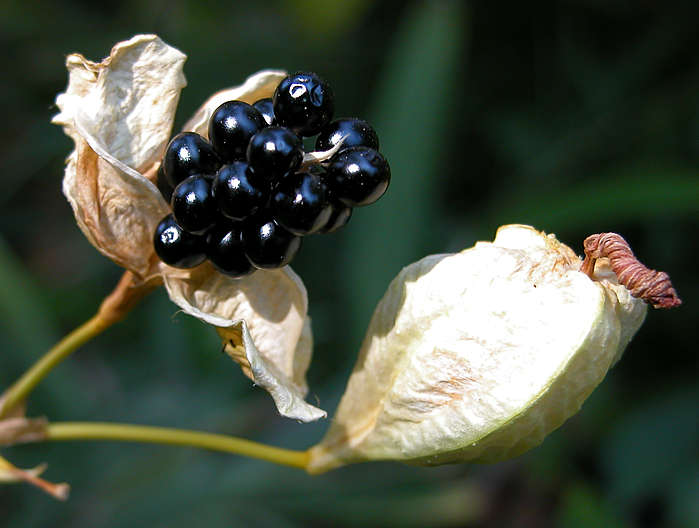
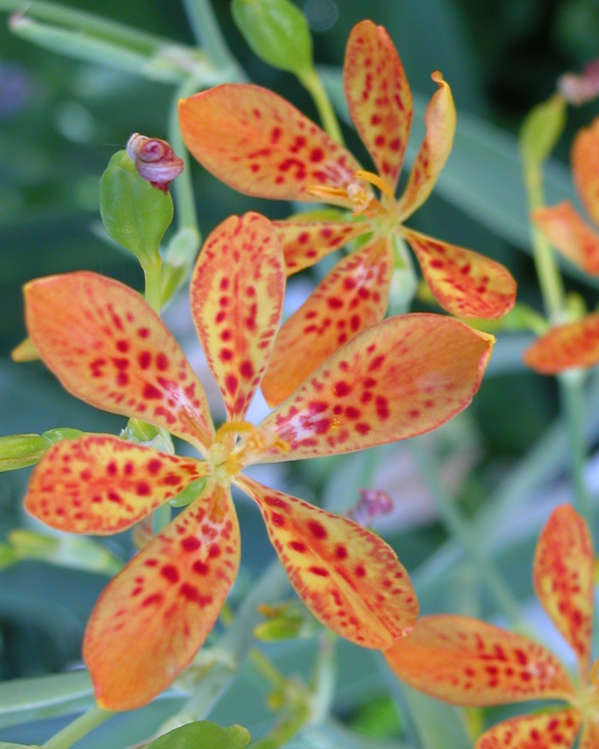
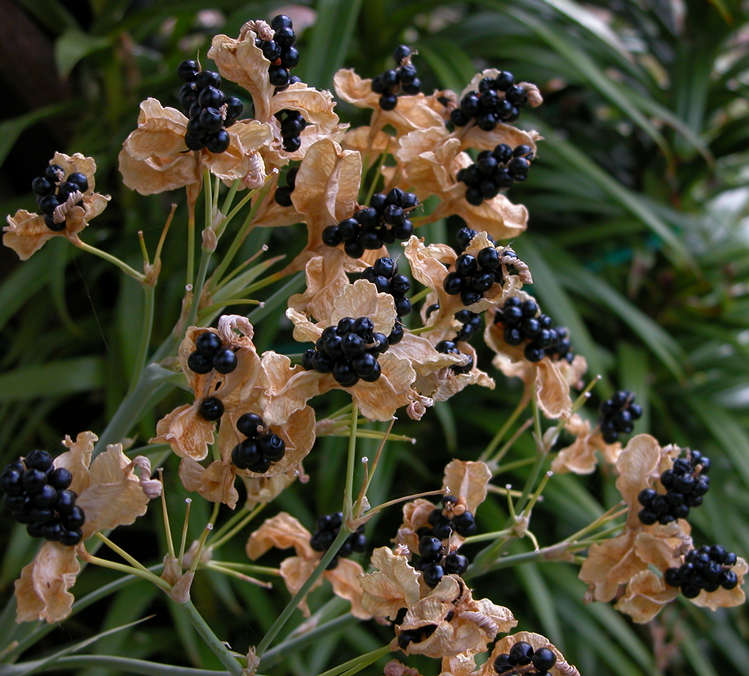
'BLACKBERRY LILY', 'SHE GAN'. Deep orange 2" flowers with red spots, blooming in early summer, followed by ornamental clusters of black seeds. Hardy perennial to 1 - 4 feet, with iris-like leaves. China, Japan. Zone 5. The rhizome is an important Chinese medicine, and has been shown to be antifungal and antiviral. Young leaves have been eaten. Germinates in 2 - 12 weeks at warm temperatures.
"Better no rule than cruel rule."—Aesop.
BELLIS (BELL-is)
COMPOSITAE. 'ENGLISH DAISY'. Attractive annuals, biennials and perennials growing in tufts. Favorites for edging, rock gardens, and colonizing in lawns. May be sown in early spring for bloom the first year in harsh climates, or up to late summer for bloom the following year. Germinates in 10 - 15 days. Space 6" apart. Best in cool climates and moist soil. Good carpeting in shady areas, and for winter flowering pot plants in the cool greenhouse. Good cut flowers. Seed viable 6 - 7 years.
—Bellis perennis White. (1000) BELL-3. Packet: $2.50
1/4 Ounce: $6.00
Ounce: $12.00
'ENGLISH DAISY'. Single white 1 - 2" daisies in spring and early summer. Hardy perennial to 6", with rosettes of 1 - 2" leaves. Europe. Zone 3. Excellent for sowing in lawns, good with moisture and stands shade. This is the original daisy used in the classic love-divination "He loves me, he loves me not..." Germinates in 1 - 2 weeks.
BERGENIA (ber-JEN-ee-a)
SAXIFRAGACEAE. Vigorous creeping Asian perennials, with handsome foliage and attractive flowers in early spring. Best in humusy soil and part shade. Makes nice blooming plants in 2 - 3 years. Sometimes called 'pigsqueak'.
—Bergenia cordifolia 'Winterglow'. (100) BERG-6W. Packet: $3.50
'HEART -LEAF BERGENIA'. Striking red-colored fall and winter foliage. Bright red flowers in nodding clusters, March to May. Hardy perennial to 16", with large, rounded, heart-shaped evergreen leaves. Siberia and Mongolia. Zone 3. Germinates in 1 - 2 weeks.
BERKHEYA (berk-HEY-a)
COMPOSITAE. Interesting showy African daisies.
—Berkheya purpurea. (25) BERK-24. Packet: $3.00
'ZULU WARRIOR'. Large silvery-blue to lavender 3" wide daisies with dark centers, in late summer. Tender thistle-like perennial to 15 - 28". S. Africa. Zone 6. Good cut flowers. Germinates in 1 - 2 weeks.
BERLANDIERA (ber-LAN-dee-ER-a)
COMPOSITAE. Southwestern perennials valued for bloom and fragrance.
NEW—Berlandiera lyrata. (25) BERL-12. Packet: $3.50
Click for photo »
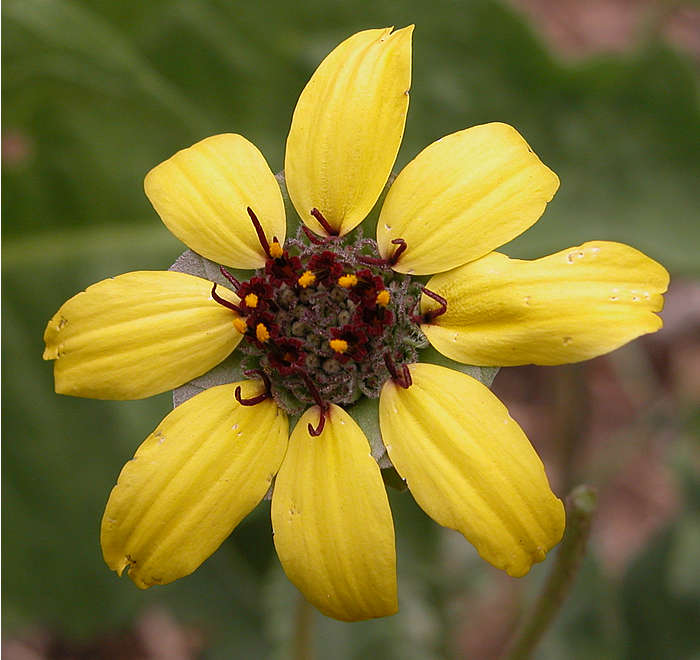

'CHOCOLATE DAISY'. Yellow 2" dark-centered daisies with a wonderful chocolate scent from 8AM to noon. Perennial to 1 1/2 feet, with silvery pinnate foliage. Kansas to New Mexico. Zone 5. Flowers used as seasoning. Easy from seed which germinates in 1 - 3 weeks. This is a high-quality lot that has given us 76% germination.
BETULA (BE-tu-la)
BETULACEAE. 'BIRCH'. Hardy ornamental N. Hemisphere trees and shrubs, most preferring moist sandy soils. Valued for their graceful habit, and some for timber. They range to 70° N. latitude. Best from seed sown in fall. If given light, they do not need cold treatment.
—Betula lenta. (500) BETU-14. Packet: $2.50
5 Grams: $10.00
'SWEET or CHERRY BIRCH'. Tree to 15 - 70 feet, with dark reddish brown aromatic bark, and 2 - 5" leaves. Round headed when young, pendulous with age. E. U.S. Zone 3. The bark and twigs have a strong wintergreen flavor, containing methylsalicylate, and are an official source of Oil of Wintergreen. The leaves have been used for tea and the sap fermented for 'birch beer'. The inner bark has been eaten, and the richly marked wood valued for cabinetry. Sow on the surface, germination irregular.
BIDENS (BI-denz)
COMPOSITAE. Easily grown annual and perennial herbs with pretty yellow or white daisy like flowers. Similar to Cosmos. Likes full sun and moist soil. Good for cut-flowers. Sow hardy kinds outdoors in March, to bloom in 10 weeks. Half hardy kinds in flats to germinate in 9 days at 60°F. Set out in April to bloom in July to September.
—Bidens pilosa. (100) BIDE-19. Packet: $2.50
1/4 Ounce: $7.50 BULK OUT OF STOCK - packets are still available
'BEGGAR'S TICKS'. White flowers with yellow centers, May to October. Annual to 4 feet. Tropics. Young leaves eaten and used for tea. Medicinal—antibiotic, anti-inflammatory, anti-fungal, anti-malarial, anti-cancer, against enlarged prostate, and many more. Dead-head to prevent seeding. Germinates in 1 - 2 weeks.
BIXA (BEE-ha)
BIXACEAE. A single species. Good in the far South or in the greenhouse.
—Bixa Orellana. (50) BIXA-1. Packet: $2.00
Ounce: $6.00
1/4 Pound: $12.00
Pound: $25.00
'ANNATO', 'ACHIOTE', 'URUCU', 'LIPSTICK TREE'. Large, five-petaled rose, pink or white flowers with yellow stamens, followed by striking, maroon to vivid scarlet 2" spiny pods. Amazon Basin. Zone 10. For millennia Amazonian Indians have used the red dye obtained from the seedcoat as face and body paint. Cultivated throughout the tropics for food coloring and dye for cheese, soap, cloth, paint, lipstick, margarine, etc. A few seeds can be added to rice, soups, or to flavor chocolate and meats. Seeds eaten cooked in butter. Bark provides fiber. Good hedge and honey plant. Used medicinally. Soak, nick hard ones, to germinate in 2 - 15 weeks or more warm.
BLETILLA (ble-TIL-a)
ORCHIDACEAE. Hardy east Asian terrestrial orchids, easily grown in rich, well-drained soil.
—Bletilla striata. (1000) BLET-10. Packet: $2.50
1/10 Gram: $7.50
Click for photo »

Light purple 1 - 2" flowers in spikes of up to 8, in early summer. Hardy terrestrial (ground dwelling) orchid to 1 - 2 feet, with narrow leaves. Japan to Tibet. Zone 6. Used in traditional Chinese medicine. Sow on the surface of either sterile chopped peatmoss, or well-aged compost, use a plastic bag and keep moist until seedlings appear. Germination info:
https://www.ncbi.nlm.nih.gov/pmc/articles/PMC6522586/
BORAGO (bo-RA-go)
BORAGINACEAE. Robust annuals and perennials with showy blue or white saucer-shaped 5-petaled flowers and downy foliage. Grown in the flower and herb garden, and they are good bee plants. Drought resistant and free-flowering. Sow seed in spring or fall where they are to flower. Germinates in 1 - 2 weeks. Space 9 - 15" apart. Seed viable 8 - 10 years.
—Borago officinalis. (100) BORA-3. Packet: $2.50
Ounce: $5.00
1/4 pound $12.00
'BORAGE'. Easily grown showy annual with blue or purplish star-shaped 1 1/2" wide flowers in nodding clusters in summer, on branched 2 foot stems. Silvery, downy leaves. Mediterranean. The young fresh leaves have a refreshing cucumber-like flavor and are used in salads, summer drinks and cooked greens. The flowers are a colorful addition to salads, can be floated on cool drinks, and are candied. Pliny called it ephrosynon, believing it made men merry and joyful who drank wine flavored with it.
—Borago officinalis var. alba. (25) BORA-3A. Packet: $2.50
10 grams: $12.00
50 grams: $40.00
'WHITE-FLOWERED BORAGE'. The lovely white-flowered form, so rarely seen. Germinates in 1 - 3 weeks.
BRASSICA (BRASS-i-ka)
CRUCIFERAE. 'MUSTARD', 'COLE'. Tall yellow-flowered plants, including many valuable edibles like broccoli, Brussels sprouts, cabbage, cauliflower, collards, kale, kohlrabi, mustard, rape, rutabaga, turnip, etc. Easily grown, mostly cool season crops. The seed is viable 4 to 15 years or more.
—Brassica nigra (=Sinapis nigra). (100) BRAS-19. Packet: $2.50
Ounce: $7.50
1/4 Pound: $20.00
'BLACK MUSTARD'. Tall hardy annual to 3 - 10 feet or more, with abundant 1/4" yellow flowers on large, wide spreading branches, followed by narrow 3/4" pods filled with the 'Mustard Seed' of commerce. Eurasia. The ground seeds are the main source of table mustard, mixed with water and vinegar. Cultivated since ancient times as a medicine and condiment, it was popular with the Greeks and Romans. The young leaves are used as a pungent addition to salads and greens. Germinates in 1 - 2 weeks.
BRIZA (BREE-za)
GRAMINEAE. 'RATTLESNAKE GRASS'. Attractive ornamental grasses grown for their panicles of nodding spikelets resembling rattlesnake rattles, which gracefully hang from thread-like stems. Easily grown in ordinary soil with good drainage in full sun. Germinates in 1 - 2 weeks, and is viable for 3 years or more. Sow in early spring.
—Briza maxima. (100) BRIZ-1. Packet: $2.50
Ounce: $7.50
1/4 pound $20.00
'LARGE RATTLESNAKE GRASS'. Large, graceful nodding 1/2" long spikes, sometimes bronzy, in 5" clusters. Hardy annual ornamental grass to 2 feet. Mediterranean. An excellent ornamental and prized in dried arrangements. Good for naturalizing. Germinates in 1 - 2 weeks.
BRUGMANSIA (brug-MAN-zee-a)
SOLANACEAE. 'ANGEL'S TRUMPET TREE'. Small South American trees with spectacular pendulous trumpet shaped blooms, most fragrant in the evening. Excellent ornamentals for the greenhouse California and the South, never failing to provoke comment when in bloom. May stand some frost, and will often renew themselves from the roots if cut to the ground. Good in tubs, which can be over-wintered in a cellar. Will often bloom in small 10" pots. Formerly included in Datura, which see for the herbaceous Angel's Trumpets, and for their medicinal and poisonous properties. Some are grown for commercial production of medicinal tropanes.
—Brugmansia sanguinea. (10) BRUG-16. Packet: $2.50
10 grams (about 250 seed): $10.00
50 grams: $40.00
Click for photo »
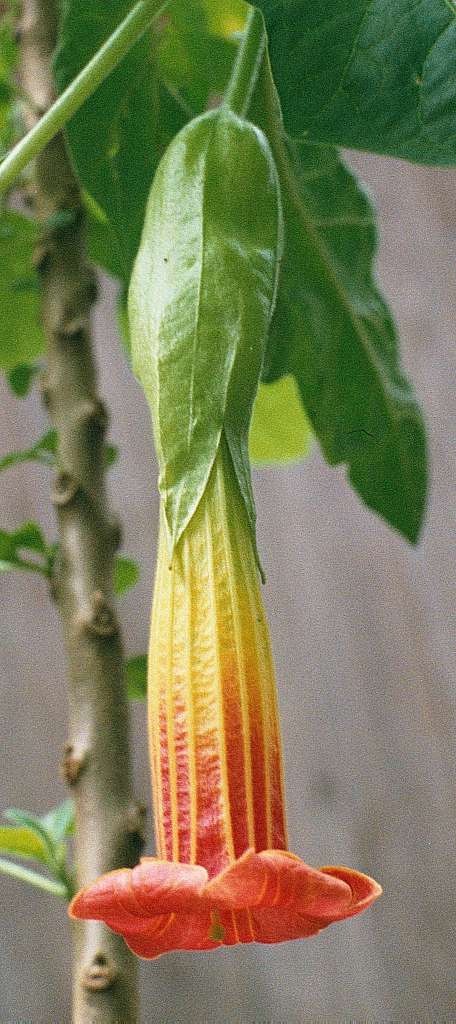
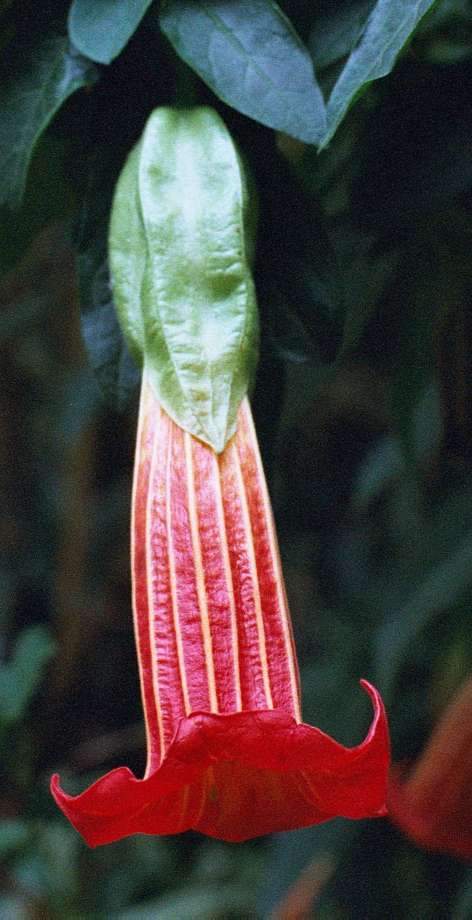

'EAGLE TREE'. Large, pendulous 8 - 12" trumpet-shaped flowers are deep red with yellow veins, shading upward to yellow. Spindle-shaped 3 1/2" fruits Small tree to 12 feet, with downy, dark green leaves. Andes. Fairly hardy, standing quite a bit of frost, sprouting from the base. A spectacular, long lived ornamental, thriving in cool coastal climates. Soak seed 1 - 2 days to germinate in 2 - 8 weeks warm.
BUTIA (BOO-tee-a)
PALMAE. 'YATAY PALMS'. Attractive small feather-leaved South American palms grown for ornament and fruit. Some are fairly hardy. Soak seed for a day or two & plant in sterile soil or sandy peat. Keep warm and inspect for roots now & then — as the seeds sprout, pot up. May take up to 3 years.
—Butia capitata. (10) BUTI-4. Packet: $2.50
1/4 pound: $18.00
'PINDO, JELLY, or PEACH PALM'. Small palm to 10 - 20 feet, with gracefully arching, grey-green, 8 - 12 foot fronds. Brazil 8c Uraguay. Produces large clusters of fragrant yellow inch-wide edible fruits. "Fruit is delicious — a complex orange/peach/mango taste. Nut is very hard, but if cracked tastes like coconut."—A. Lord. Nut polished and used as beads. One of the hardiest palms—to 15°F.