DATURA
—Datura Metel Double Purple. (20) DATU-12DP. Packet: $2.50
5 grams: $7.50
Click for photos »
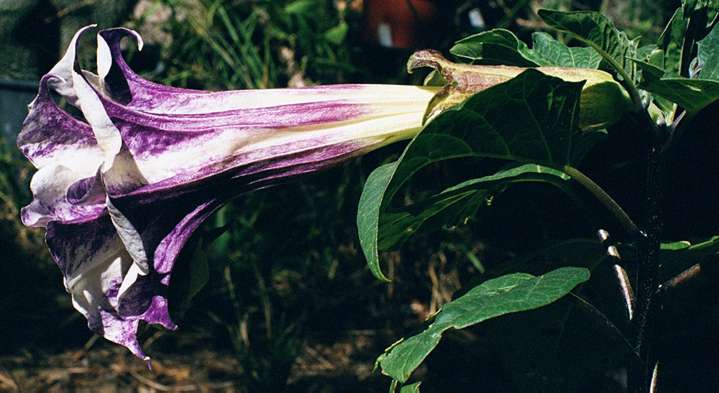
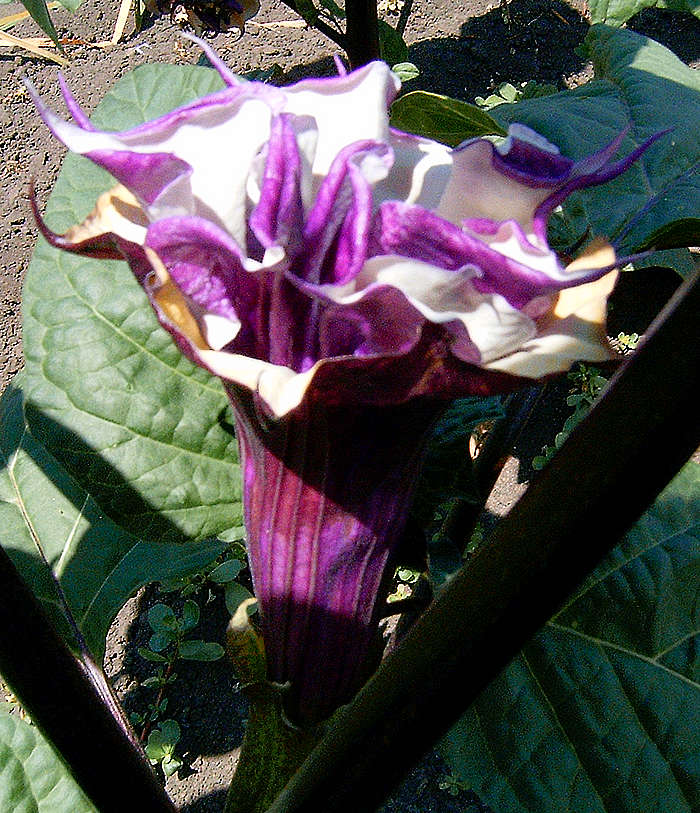
Large dark purple red, fully double, sometimes triple or quadruple trumpets. "Beautiful pot plant."—G. Howard, 1992. Germinates in 2 - 8 weeks at warm temperatures.
DECAISNEA (de-KAIS-nee-a)
LARDIZABALACEAE. Two species of odd, thick-trunked shrubs. Best in warm sheltered places and sun or part shade. Almost any soil.
—Decaisnea Fargesii. (20) DECA-7. Packet: $2.50
Seed stored moist and refrigerated.
Click for photo »
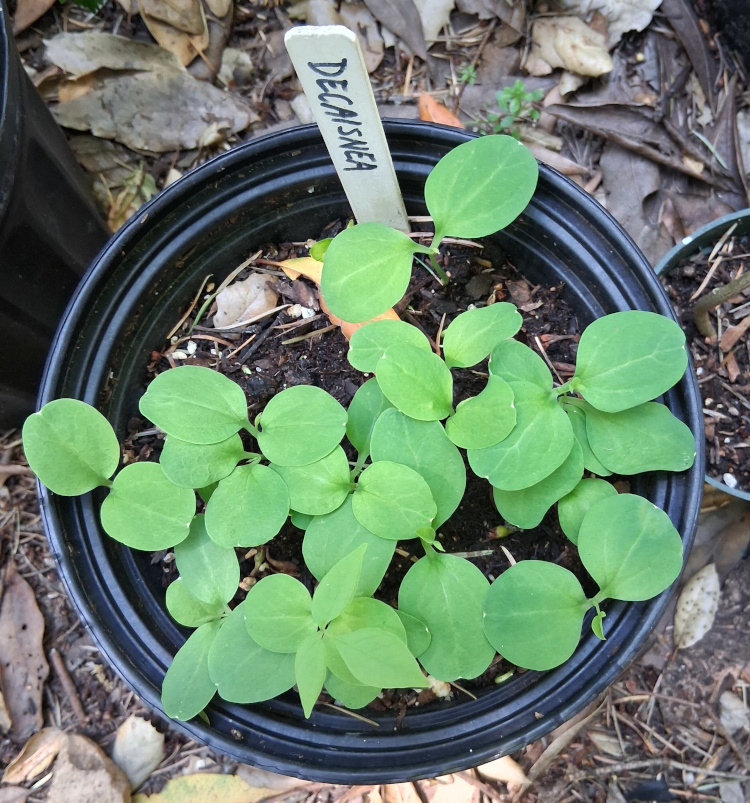
Unusual yellow-green 1 1/4" bell-shaped nodding yucca-like flowers in long pendulous 1 1/2 foot racemes in early summer, followed by striking deep metallic-blue 4" pods resembling broad beans. Stunning shrub to 9 - 16 feet, with large pinnate 3 foot long leaves. W. China. The pulp of the pod is juicy, edible and sweet or insipid. Ordinarily, give dry seed 3 months warm then 3 months cold, to sprout irregularly over a one year period. This lot, because of being stored moist, is giving us high germination in 8 weeks!
DELPHINIUM
—Delphinium consolida 'Earl Grey'. (200) DELP-30EG. Packet: $2.50 ORGANIC
Lavender-grey flowers on a tall annual larkspur to 3 - 4 feet. Germinates best at cool temperatures.
—Delphinium occidentale. (50) DELP-70. Packet: $2.50
Blue to lavender to white flowers in 2 foot spikes. Hardy perennial to 6 feet, blooming the second year from seed. Colorado. Full sun or part shade, likes moist soil but tolerates dryness. Give seed 4 weeks cold for best germination, but about half will germinate in 4 - 8 weeks warm.
DERMATOBOTRYS (der-ma-to-BOT-rez)
SCROPHULARIACEAE. A single species.
—Dermatobotrys saundersii. (25) DERM-4. Packet: $3.75
'TREE JOCKEY'. Curved tubular 2" flowers are coral pink to scarlet, in winter, followed by edible berries. Curious shrub to 3 feet, with caudex-like base and fleshy 6" leaves. Coastal forests of South Africa and Madagascar, where it usually grows in the forks of trees, hence the name. Zone 9 or 10, best in cool coastal climates. Does well in containers of humusy soil. Germinates in 2 - 4 weeks.
DIANELLA (di-a-NEL-la)
LILIACEAE. Half-hardy rhizomatous perennials related to Phormium, with grass-like or sword-shaped leaves and purple berries. Stands some frost. Smoke treatment may help germination.
—Dianella tasmanica. (10) DINL-23. Packet: $2.50
'BLUE FLAX LILY'. Blue 3/4" flowers in 2 foot clusters on stems to 5 feet tall in spring and summer, followed by bright blue berries. "The berries are the thing."—Lord. Robust perennial from S.E. Australia, with strap-like leaves. Hardy to about 20°F. Light may help germination.
DIANTHUS
Dianthus Caryophyllus Varieties:
'CARNATIONS', 'CLOVE PINKS'. Well known and easily grown perennial, fairly hardy with protection. Grown in greenhouses commercially, but many types are adapted to the border, and the following are among the hardiest and best. The petals have been eaten candied. Germinates in 1 - 2 weeks.
—Dianthus Caryophyllus Chabaud Mix'. (250) DIAN-30CH. Packet $2.50
1/4 Ounce: $7.50
Ounce: $14.00
The Chabaud strain of carnations originated over a century ago, and this strain is reselected for large, long-stemmed, fragrant, fully double fringed flowers in red, pink, purple, white, and yellow. To 18 - 24". tall. Zone 5.
DIERAMA (di-er-AM-a)
IRIDACEAE. Several South African cormous herbs, grown in warm areas for their beautiful flowers. Similar to Sparaxis and Ixia.
—Dierama pucherrimum 'Dark Cerise'. (10) DIER-19D. Packet: $3.50
Click for photo »
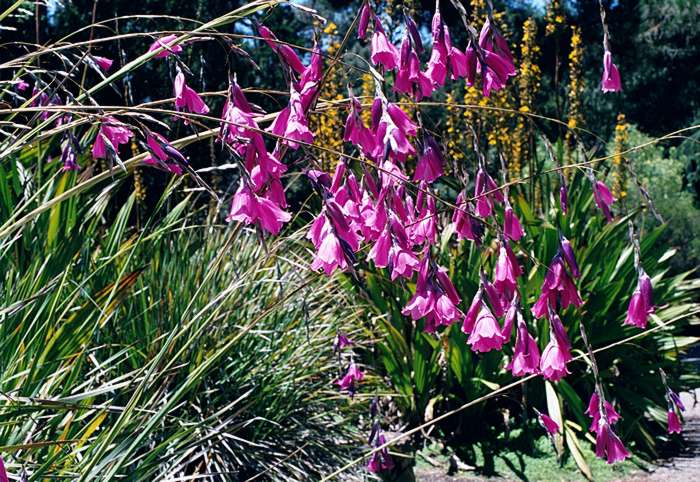
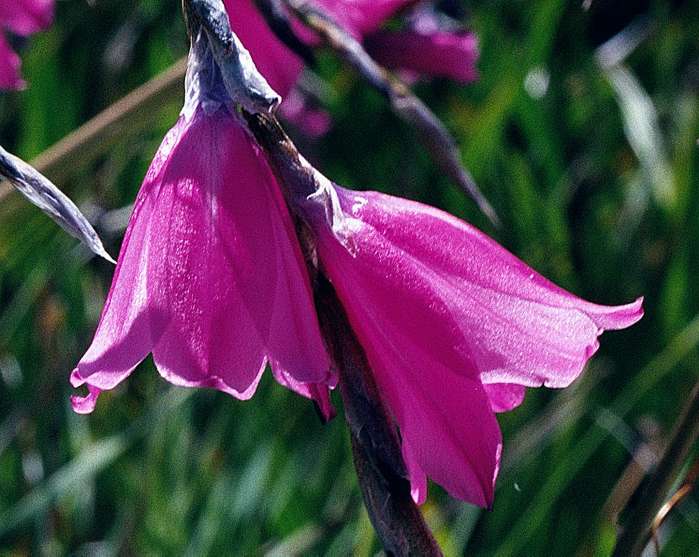
'FAIRY WANDS'. Dark purple bell-shaped 1 1/2" flowers in spikes, on arching stems to 5 - 8 feet tall. Stiff sword-shaped leaves. South Africa. Zone 7. Germinates in 4 - 6 weeks warm.
DILLWYNIA (dil-WIN-ee-a)
LEGUMINOSAE, tribe: MIRBELIEAE. Attractive small Australian endemic heath-like shrubs with yellow and red pea-like flowers. Of diversity sampling interest.
—Dillwynia sericea. (50) DILL-22. Packet: $2.50
'SHOWY PARROT-PEA'. Apricot flowers with red centers, sometimes yellow or pink, in dense, spike-like clusters in spring. Small shrub to 3 feet, with needle-like leaves. E. Australia. Zone 8 or 9. Good in tubs. Nick to germinate in 2 - 4 weeks.
DODONAEA (do-do-NEE-a)
SAPINDACEAE. Widespread warm-region evergreen trees and shrubs with ornamental foliage and winged pods. Good in arid regions. Seed long-lived.
—Dodonaea viscosa 'Purpurea'. (25) DODO-12P. Packet: $2.50
Gram: $7.50
5 grams: $20.00
Attractive purple-red leaves and red pods. Nice.
'GIANT HOP BUSH'. Shrub or small tree to 15 - 30 feet, with small greenish flowers followed by attractive winged pods. Tropics. Zone 8. Fast growing and easy almost anywhere, good sand binder and fire resistant. The hard heartwood is almost black. Leaves used medicinally, as a fish poison, and as a coca adulterant in Peru. Germinates in 2 - 4 weeks, with stragglers. Nicking may help some lots.
EDRAIANTHUS (ed-rai-AN-thus)
CAMPANULACEAE. Showy rock garden perennials with Campanula-like flowers in spring and summer. Good in well-drained soil, sun to part shade. Dislikes winter wet. Some need GA-3 or light to germinate
—Edraianthus graminifolius. (50) EDRA-10. Packet: $4.00
Brilliant violet-blue 3/4" bells in dense round clusters, May to July. Hardy perennial forming a cushion of grass-like leaves 2 - 4" tall. Italy to Greece. Give seed GA-3 500 ppm, plus 40°F.
EMPETRUM (em-PET-rum)
EMPETRACEAE. Several species of low evergreen shrubs from cold regions. Good in the rock garden.
—Empetrum nigrum. (100) EMPE-8. Packet: $3.00
'MOSSBERRY', 'CROWBERRY'. Tiny pink to purplish 1/4" flowers, abundant in April to June, followed by glossy black-purple 1/4" edible berries. Low spreading heath-like shrub to 8 - 12", with tiny, needle-like 1/4" leaves, giving it a mossy look. N. America to Eurasia. Very hardy, Zone 3, often growing among rocks. Berries a favorite food, eaten in a variety of ways by northern peoples, from Eskimo to Icelander. Twigs brewed as tea. Germinates in 4 - 6 weeks warm with GA-3.
EPHEDRA (e-FED-ra)
EPHEDRACEAE. Nearly leafless shrubs with thin, broom-like branches. Most from warm, dry deserts. Gymnosperms with tiny cones. The only genus of the family. Germinates readily at 70°F. Belongs in every diversity-sampling collection.
—Ephedra distachya ssp. distachya. (10) EPHE-11D. Packet: $5.00
https://www.botanic.cam.ac.uk/learning/trails/medicines/sea-grape-ephedra-distachya/ Photo.
https://www.giftpflanzen.com/ephedra_distachya.html In German.
'SEA GRAPE'. Leafless dark blue-green stems bearing tiny yellow flowers followed by red berries. Shrub to 20", often trailing. Europe and Asia. Zone 4 or 6. Needs well-drained sandy, rocky soil. Alkaloid-rich.
—Ephedra nevadensis. (100) EPHE-30. Packet: $2.50
Ounce: $10.00
1/4 pound: $30.00
'MORMON TEA', 'GREY JOINT-FIR'. Pale greyish or bluish-green needle-like branches. Low shrub to 6" to 3 feet tall. Deserts of Utah to California. Hardy to Zone 5 or 6. The Indians roasted, ground, and ate the seeds as mush. The twigs make a pleasant tea, popular with Indians and settlers. Germinates in 2 - 6 weeks.
EREMURUS
—Eremurus robustus. (20) EREM-36. Packet: $3.00
Soft pink 1/2" wide flowers in dense spikes up to 3 feet long and 4" wide, in summer. Hardy perennial to 8 - 10 feet, with blue-green, 2" wide strap- like 4 foot leaves. Central Asia. Seed needs multiple warm/cold cycles, and grow on at cool temps.
ERIOPHYLLUM (er-ee-o-FIL-Ium)
COMPOSITAE. Woolly annuals & perennials oi western N. America. Drought-resistant ornamentals valued for their yellow flowers. Germ. in 10 - 20 days.
—Eriophyllum lanatum. (250) ERIP-15. Packet: $2.50
'WOOLLY SUNFLOWER'. Bright yellow 3/4 - 1 1/2" wide flowers resembling miniature sunflowers. Woolly perennial to 2 feet. W. N. America. A fine plant for western gardens. Germinates at cool temps.
EUCALYPTUS (you-ka-LIP-tus)
MYRTACEAE. Over 500 species of aromatic evergreen Australian trees and shrubs with puff-like flowers. Fast growing, the young plants having very different leaves from the usually sickle-shaped adult leaves. A variety of forms, from forest giant to gnarled shrub, makes them adapted to many landscaping situations. The foliage can be dried for arrangements—stand ends in glycerin a few days. Dwarf kinds good in tubs. Excellent firewood crop, and they produce abundant honey and pollen. Easy from seed, germinating in 1 - 4 weeks warm unless noted. A few kinds need cold or GA-3. Smoke treatment may help germination of some. Seed has a beneficial mycorrhizal relationship with the chaff, so it is usually supplied as a seed/chaff mixture.
'Gums' are tall with smooth or peeling bark, 'ironbarks' have persistent bark, 'mallees' are shrubby, with several stems from a ligno-tuber, and the 'marlocks' are dwarf kinds.
In California Eucalyptus trees are being destroyed in great numbers by anti-exotics extremists who claim they suppress native vegetation. On the contrary, studies have shown greater coverage and increasing diversity of natives under Eucalyptus canopies! Also, Eucalyptus groves are the preferred overwintering habitat of native monarch butterflies.
—Eucalyptus ewartiana. EUCA-80. Packet: $2.50
https://apps.lucidcentral.org/euclid/text/entities/eucalyptus_ewartiana.htm Photos and information.
'EWART'S MALLEE'. Multiple stems to 6 - 20 feet, from a large woody tuber. Narrow leaves, white flowers, peeling bark. W. Australia. Zone 8.
EUPHORBIA
—Euphorbia amygdaloides 'Purpurea'. (10) EUPH-7P. Packet: $2.50
Purple-red tinted foliage, new growth red. Yellow or lime green flowers in spring and summer. Hardy perennial to 2 feet. Eurasia. Zone 5.
FUMARIA (foo-MA-ree-a)
FUMARIACEAE. Ornamental and medicinal annual and biennial herbs with finely divided ferny leaves. Excellent in the wild garden.
—Fumaria parviflora. (50) FUMA-20. Packet: $2.50
Gram: $7.50
Abundant spikes or small white, purple-tipped flowers in spring. Sprawling annual with attractive divided foliage. A nice winter annual here in central California, good for naturalizing. Germinates in 1 - 4 weeks, best at cool temperatures.
GALIUM
—Galium aparine. (100) GALI-2. Packet: $2.50
5 grams: $7.50
25 grams: $20.00
'CLEAVERS', 'ROBIN-RUN-IN-THE-GRASS'. Scrambling annual to 2 - 6 feet, with whorled leaves and tiny white flowers. North temperate regions. The tops were made into tea, the seeds roasted for a coffee substitute, and the roots used as a substitute for madder to produce a red dye. Used as a vegetable rennet. Germinates in 3 - 4 weeks.
GINKGO (GINK-go)
GINKGOACEAE. A single species. Germinates in 2 - 4 months.
—Ginkgo biloba. (10) GINK-1. Packet: $2.50
Seed stored moist and refrigerated.
1/4 Pound: $10.00 (about 65 seed)
Pound: $35.00
Click for photo »
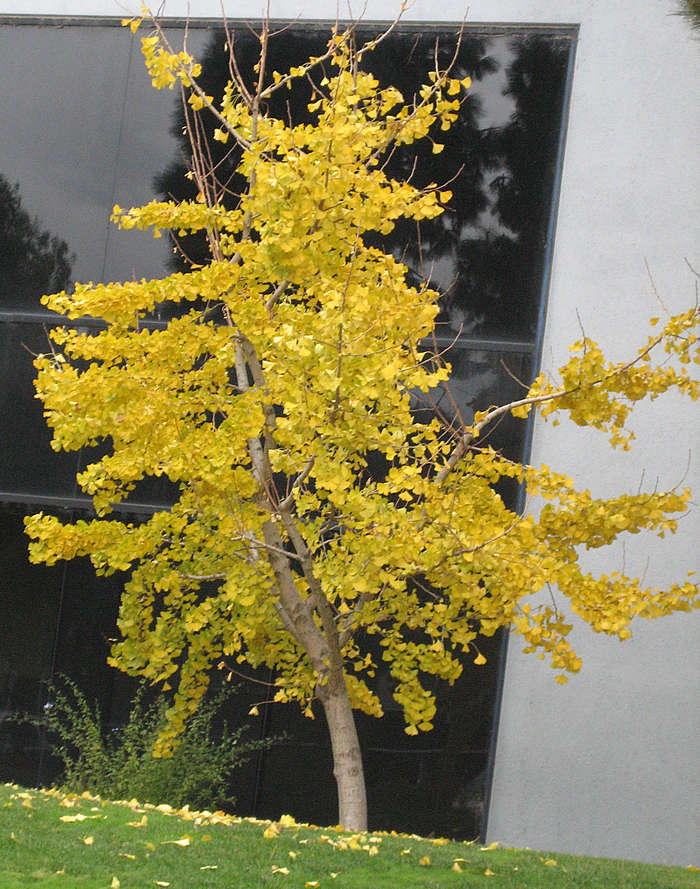
'MAIDENHAIR TREE'. Hardy tree to 120 feet with handsome 2 - 3" fan-shaped leaves. Beautiful golden fall color. E. China. A relict species with identical fossils dating to 200 million years ago. Probably extinct in the wild (may occur wild in Zhejiang) and surviving only in cultivation. As this is the sole remaining member of a formerly widespread family, it is the prime example of preservation through dissemination, and a model species for biological enrichment. The seeds are eaten and both seeds and leaves are valued in Chinese medicine, and have been proven useful for a variety of conditions associated with ageing. Hardy to Zone 5 or more, easily grown, pest free. Plant it everywhere!
GLEDITSIA
—Gleditsia sinensis. (10) GLED-8. Packet: $3.50
Ounce: $9.00
'CHINESE HONEYLOCUST'. Attractive rare small tree to 40 feet, with pinnate 8" leaves and small clusters of flowers followed by flat 10" pods. China and Mongolia. Zone 5. Nick seed to germinate in 2 weeks.
GLOBULARIA (glob-u-LAR-ee-a)
GLOBULARIACEAE. Ornamental herbs and subshrubs from the Mediterranean region, with blue flowers in ball-like heads. Easy from seed and good in full sun and well-drained soil. Germination irregular, from 9 to 106 days.
—Globularia nudicaulis. (50) GLOB-17. Packet: $2.50
Blue puff-like 1" flowers held above a low mound of shining leaves. Hardy perennial to 6" or so. Spain to Yugoslavia. Zone 3. Best in lime soil.
GLYCYRRHIZA
—Glycyrrhiza echinata. (25) GLYC-8. Packet: $2.50
'RUSSIAN LICORICE'. Short, globular heads of flowers and small pods covered with straight spines. Feathery pinnate foliage. E. Europe, W. Asia. A source of Russian and German licorice. Germinates in 1 week.
—Glycyrrhiza yunnanensis. (20) GLYC-28. Packet: $2.50
Nice photo of pods: http://www.gapphotos.com/imagedetails.asp?imageno=298893
Info: http://www.efloras.org/florataxon.aspx?flora_id=2&taxon_id=242323675
'YUNNAN LICORICE', 'YUN NAN GAN CAO'. Small purple flowers in dense heads in May and June, followed by pods with pinkish hairs. Perennial to 3 feet, with feathery 4" leaves. Mts. of Yunnan, China, to 8000 feet. Zone 8 or 9. Nick seed to germinate in 1 - 2 weeks.
GYMNOCLADUS (JIM-no-KLAD-us)
LEGUMINOSAE. Two species of deciduous trees grown for ornament and timber. Stands heat, cold, drought and poor soil. Seed has a very hard coat and needs deep nicking to germinate in 2 - 6 weeks.
—Gymnocladus chinensis. (5) GYMC-6. Packet: $5.00
Click for photo »
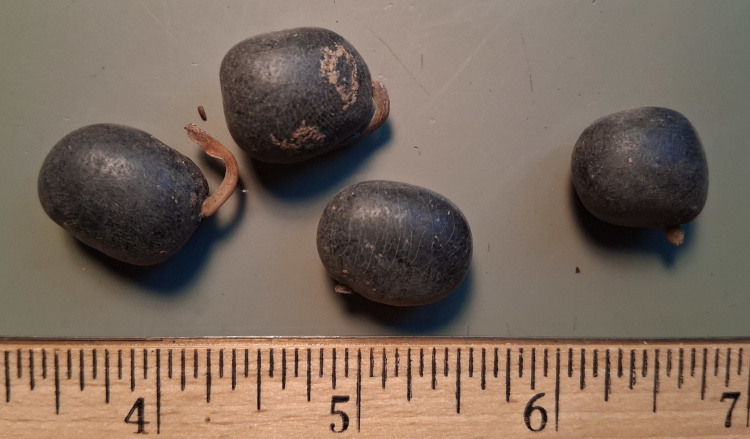
'FEI-TSAO-CHIA'. Large tree with white flowers and with smaller and more numerous leaflets than the American species, and with much thicker 3 - 4 pods. Central China. Almost unknown in the US. The pounded unripe pods were used as washing soap and are used medicinally for rheumatism, dysentery, and hematuria. Seeds eaten roasted. Nick and soak to germinate in 2 - 4 weeks.
HABRANTHUS (hab-RAN-thus)
AMARYLLIDACEAE. Central and South American bulbs related to Hippeastrum and Zephyranthes. Easy in full sun, part shade, good in sandy soil and in pots. Outdoors in California and the South.
—Habranthus robustus. (25) HABR-10. Packet: $2.50
Click for photo »
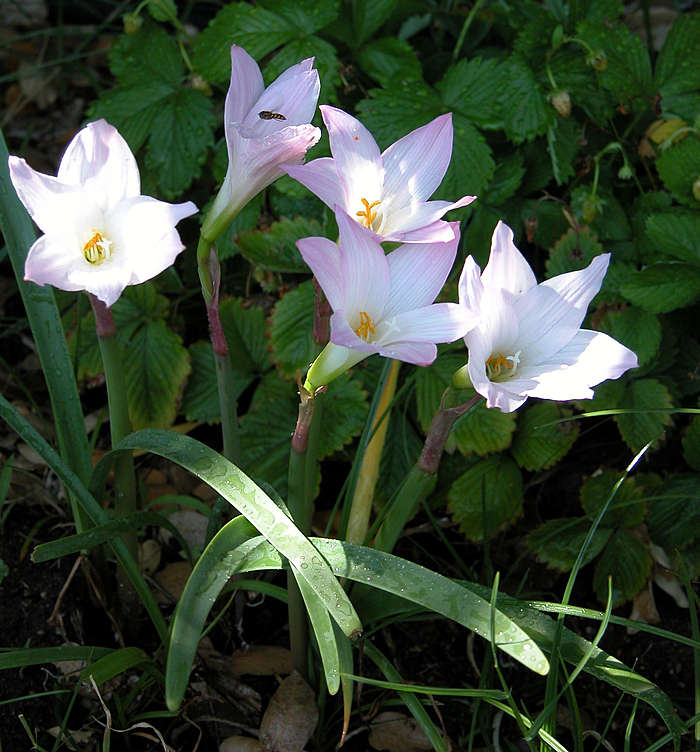
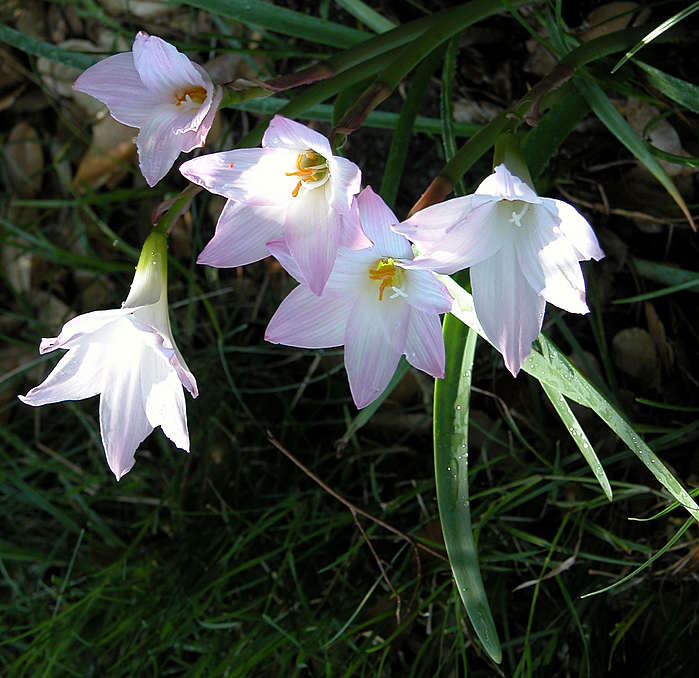
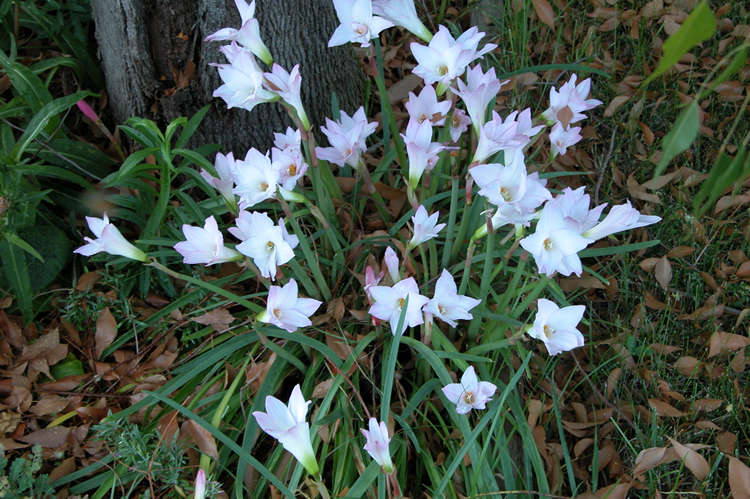
Large, rosy-pink 3" long and wide flowers with green throats, borne on 9" stalks in spring, before the leaves. Narrow blue-green leaves. Argentina. Zone 8. Evergreen in California. Germinates in 1 - 3 weeks.
HAKEA (HA-kee-a)
PROTEACEAE. 'PINCUSHION TREE'. Striking evergreen Australian shrubs related to Grevillea, Banksia, and Protea. Noted for their exceedingly diverse foliage and interesting flowers. Good outdoors in California and the South, standing seacoast exposure. Tough, drought resistant and standing several degrees of frost. Sow seed in winter or early spring in sandy soil. Seed viable 5 - 10 years or more. Smoke treatment may help germination.
—Hakea suaveolens. (10) HAKE-76. Packet: $2.50
'SWEET-SCENTED HAKEA'. Dense fluffy masses of fragrant white to pink flowers in fall and winter. Vigorous rounded shrub to 8 - 20 feet tall, with dense, divided, needle-like 4" leaves. West Australia. Good barrier plant and on dry hillsides. "Easily grown, drought resistant, self-protective..."—Hall.
HELIOMERIS (he-lee-O-mer-is)
COMPOSITAE. Showy western U.S. daisies.
—Heliomeris multiflora. (500) HELM-14. Packet: $2.50
https://calphotos.berkeley.edu/cgi-bin/img_query?rel-taxon=begins%20with&where-taxon=Heliomeris%20multiflora Lots of great photos.
https://www.swcoloradowildflowers.com/Yellow%20Enlarged%20Photo%20Pages/heliomeris%20multiflora.htm More photos.
'SHOWY GOLDENEYE'. Large bright yellow 2" daisies in summer. Slender perennial to 3 feet. Arid western U.S. Zone 4. Free-blooming the first year from seed. Germinates in 1 - 2 weeks.
HELLEBORUS
—Helleborus foetidus. (50) HELB-6. Packet: $2.50
Click for photo »
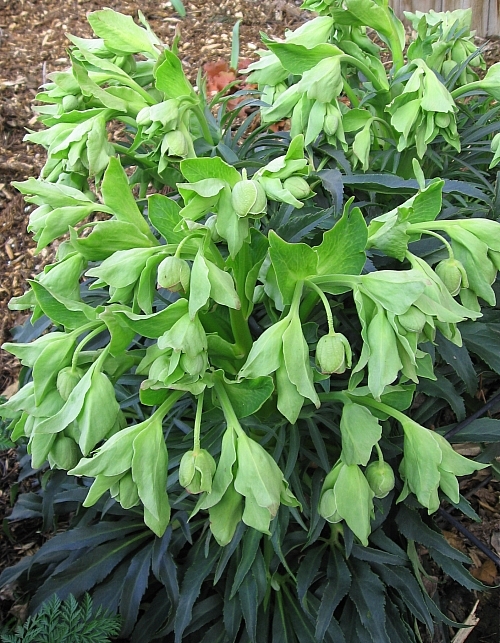
'BEAR'S FOOT'. Nodding bell-shaped pale green 1/2 - 1 1/4" wide flowers, often edged or tipped reddish or purple. Hardy evergreen perennial to 1 1/2 feet, with leathery, dark green, divided leaves. S. and W. Europe. Zone 5. Blooms February to April. Choice. Give seed 6 - 12 weeks warm, then cold treatment. Best sown in fall. Hold pots 2 years.
HIBISCUS
—Hibiscus martianus. (25) HIBS-25. Packet: $2.50
https://www.inaturalist.org/taxa/163769-Hibiscus-martianus Good photos.
'HEART-LEAF HIBISCUS', `TULIPAN DEL MONTE'. Bright crimson-red 2 - 3" flowers. Perennial to 1 -3 feet, with heart-shaped leaves. Rio Grande region. Zone 8. Blooms all year in mild areas.
HYPOCALYMMA (hi-po-ka-LEE-ma)
MYRTACEAE. 'PEACH-MYRTLE'. West Australian shrubs with narrow leaves and 5-petaled flowers. Excellent material for arid region landscaping. Easy in full sun or partial shade in well drained soil.
—Hypocalymma angustifolium. (250) HYPC-4. Packet: $2.50
'WHITE PEACH-MYRTLE'. Delicate white or pink five-petaled flowers borne along fine arching branches in late winter & spring. Low rounded shrub to 3 feet, with needle-like leaves. W. Australia. Good tub plant, and makes nice cut flowers.
ILIAMNA (il-ee-AM-na)
MALVACEAE. North American perennials and sub-shrubs with mallow-like flowers.
—Iliamna rivularis. (500) ILIA-16. Packet: $2.50
Click for photo »
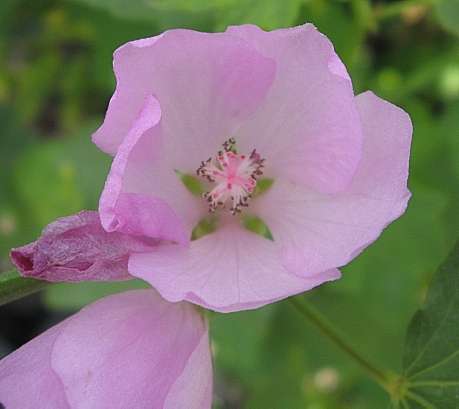
'MOUNTAIN HOLLYHOCK'. Pink hollyhock-like flowers with darker centers, in tall spikes in June to September. Hardy perennial to 4 feet, with large 4 - 8" lobed leaves. B.C. to Arizona. Zone 3. Nick or hot water to germinate in 1 - 4 weeks.
INDIGOFERA
—Indigofera tinctoria. (100) INDI-23. Packet: $2.50
5 grams: $7.50
'TRUE INDIGO'. Reddish yellow flowers in racemes, pinnate leaves. Shrub to 2 - 6 feet, with silvery branches. Tropics. Zone 9. Indigo dye is produced by fermenting the herbage in water for 12 - 16 hours, straining the liquid, and agitating it for 2 - 3 hours, and the indigo settles out as a bluish mud. It is a permanent blue dye. Used by the early Egyptians. Considered sacred by many African tribes, the dye being a gift from the sky deities. Yields about 500 pounds indigo paste per acre. Cut 2 - 4 times the first year. Many medicinal uses. Soak seed, nick unswollen ones, germinates in 1 - 3 weeks.
INULA
—Inula magnifica. (250) INUL-15. Packet: $2.50
Spectacular 6" yellow orange flowers on foot-long stalks. Hardy perennial to 4 feet. Caucasus. Zone 3. A fine plant. Germinates in 1 - 3 weeks, improved by light, GA-3, or a prechill.
IPOMOEA
—Ipomoea hederacea. (25) IPOM-32. Packet: $2.50
10 grams: $7.50
Click for photo »
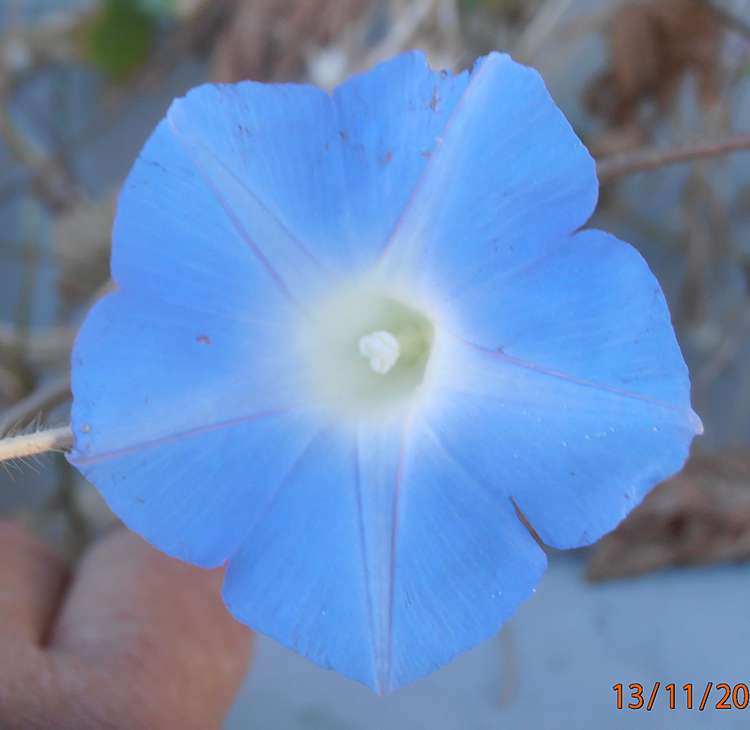
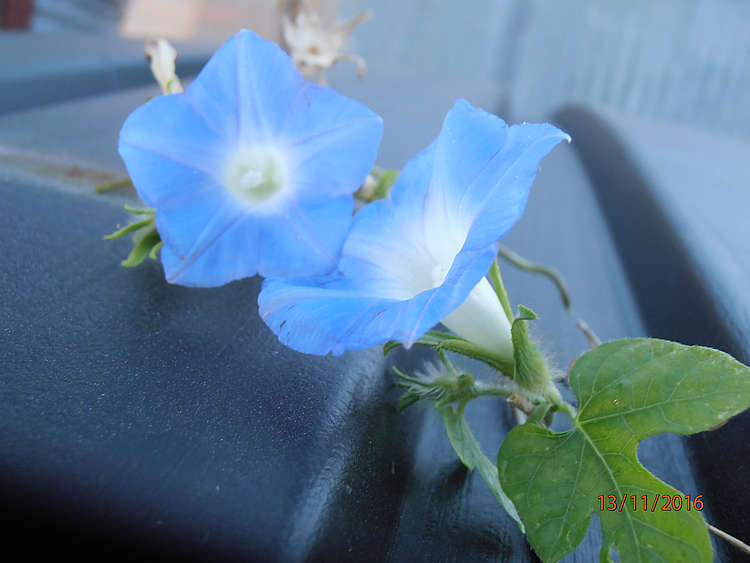
'IVY-LEAF MORNING GLORY'. Blue to pale purple 1 1/2 - 2" flowers, solitary or clustered. Showy hardy annual to 3 - 13 feet, with three-lobed leaves. Tropical America. An old fashioned garden flower, formerly much grown, with many varieties.
—Ipomoea Nil 'Windmill Chocolate'. (10) IPOM-56WC. Packet: $2.50
10 grams: $12.00
Striking large chocolate-pink flowers with a prominent white star and a white edge. To 10 feet. Soak seed, nick hard ones, to germinate in 1 - 2 weeks.
—Ipomoea purpurea 'Hazelwood Blues'. (150) . IPOM-64HZ. Packet: $2.50
25 grams: $8.00
100 grams: $20.00
White, lavender, and purple flowers, all with a dark star. Hardy annual to 15 feet.
—Ipomoea purpurea 'Quebraplatita'. (10) IPOM-64Q. Packet: $2.50
Click for photo »
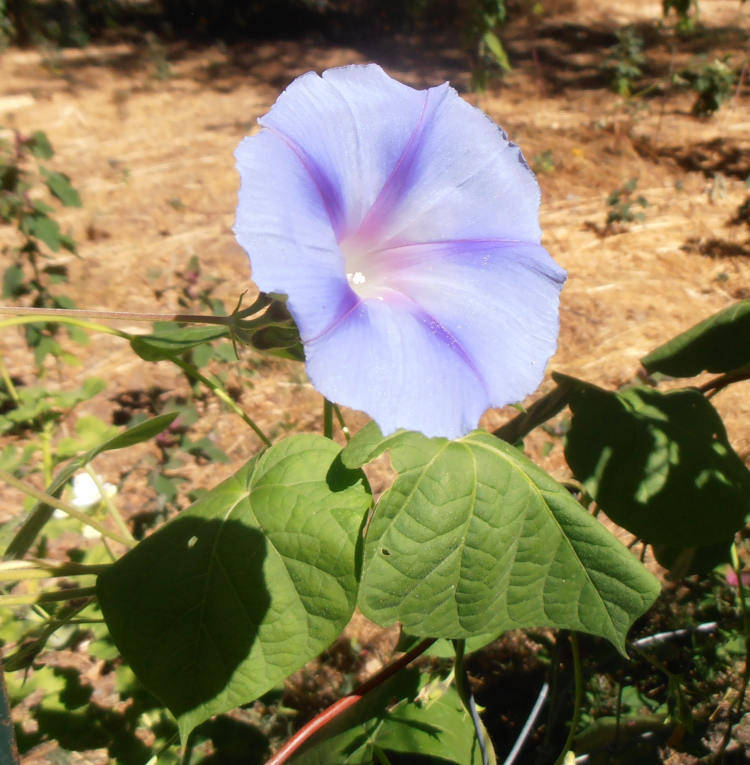
Light blue flowers with a darker star, on a hardy annual vine. Originally collected in Tijuana, where it is called quebraplatita ('little broken plate'). When the flowers are crushed in the palm, they look like a tiny broken plate. Nick seed.
JASIONE (ja-see-O-nee)
CAMPANULACEAE. Eurasian annuals and perennials with blue flowers in dense heads. Best in full sun.
—Jasione montana. (1000) JASI-17. Packet: $2.50
https://fsus.ncbg.unc.edu/main.php?pg=show-taxon-detail.php&taxonid=5679 Lots of good photos.
https://pubmed.ncbi.nlm.nih.gov/33805898/ Anti-cancer properties.
http://www.naturfotograf.com/UV_JASI_MON.html Flowers glow under ultraviolet light!
'BLUE DAISY', 'SHEEP'S BIT'. Blue flowers in dense inch-wide heads in July and August. Biennial to 12", with narrow leaves. Europe. Zone 5. Good bee plant. Good in sandy soil. The flowers glow under ultraviolet light.
JUNIPERUS
—Juniperus chinensis. (25) JUNI-5. Packet: $2.50
'CHINESE JUNIPER'. Tree or shrub to 60 feet, with scale-like leaves and brown to blue-green fruits. NE Asia. Zone 4. A fine species.
KENNEDIA (KE-ne-DEE-a)
LEGUMINOSAE. Showy Australian vines and shrubs. Good in the greenhouse, California and the South.
—Kennedia eximia. (10) KENN-6. Packet: $2.50
'FINE RED CREEPER'. Scarlet flowers on a trailing creeper, blooming for a long season. Dense dark green foliage, good ground cover. W. Australia.
—Kennedia microphylla. (50) KENN-17. Packet: $2.50
Brick-red flowers, winter to spring. Curious mat-forming plant to 3 feet wide, with attractive, small three-lobed leaves. W. Australia. Nice groundcover or rockery plant in California. Nick or hot water.
KUNZEA (KUN-zee-a)
MYRTACEAE. Ornamental heath-like evergreen Australian shrubs valued for their puff-like flowers and tidy foliage. Likes full sun, good drainage, and a mild climate. Drought resistant and good landscape material in California. Nice in the greenhouse.
—Kunzea Baxteri. (1000) KUNZ-6. Packet: $2.50
https://anpsa.org.au/plant_profiles/kunzea-baxteri/ Good photos.
https://florabase.dpaw.wa.gov.au/browse/profile/5831 Nice photos.
'SCARLET KUNZEA'. Brilliant scarlet bottlebrush flowers on a shrub to 3 - 9 feet, with narrow leaves. W. Australian endemic. Zone 9. Germinates 1 - 2 weeks.
LAVANDULA
—Lavandula Stoechas. (50) LAVA-22. Packet: $2.50
'FRENCH' or 'SPANISH LAVENDER'. Tight spikes of tiny dark purple flowers, each spike tipped with purple bracts, in summer. Shrublet to 2 feet, with narrow grey leaves. Mediterranean. Zone 7 or 8. Source of an exceptional honey, and the oil is used in perfumery. Germinates in 1 - 2 weeks.
LAVATERA (la-va-TER-a)
MALVACEAE. Easily grown herbs and shrubs with showy Hibiscus-like flowers, and often maple-like leaves. Best in full sun and average soil, giving profuse bloom all summer. Curious disjunct range.
—Lavatera thuringiaca. (25) LAVT-12. Packet: $2.50
Soft pink 2 - 3" mallow-like flowers in spikes in July to September. Hardy perennial to 4 - 5 feet, with soft grey-green 3" foliage. Central Europe.
LEONOTIS (lay-o-NO-tis)
LABIATAE. Showy tropical African annual and perennial herbs and shrubs with tubular flowers in whorls. Easy from seed or cuttings. The perennials are nice in California and the South. Full sun.
—Leonotis nepetaefolia. (200) LEON-17. Packet: $2.50
Click for photo »
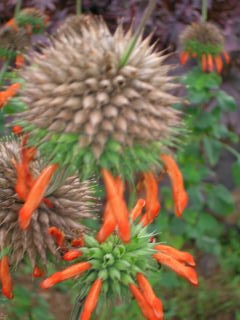
'LION'S EAR', 'PRINCE'S FLAG', 'THIEF'S HEAD'. Showy, inch-long, bright yellow to orange-red flowers in large heads. Annual to 4 feet, with broad, catnip-like leaves. The flowers are followed by attractive spiny seedheads that are useful in dried arrangements. Africa. Flowers well in a 6" pot. In Africa, night thieves would put the spiny seedheads in their hair to prevent being grabbed when fleeing. The flowers are eaten in Tanzania and the plant has many medicinal uses. Germinates in 1 - 3 weeks, but some lots are dormant and need GA-3.
LESPEDEZA (les-pe-DEE-za)
LEGUMINOSAE. 'BUSH CLOVER'. Floriferous shrubs and herbs which are easily grown in full sun and almost any soil, best in uplands. Most are fairly hardy in the North, and they are extensively planted here and abroad for ornament and reclamation. Drought resistant. Sow in early spring, 1/4" deep, to germinate in 1 - 6 weeks. About 25% are hard and need nicking. Best inoculated with group 4 or garden bean inoculant. Seed viable 20 years or more.
—Lespedeza bicolor. (50) LESP-2. Packet $2.50
Bright rose-purple flowers profusely borne in racemes along the branches, bending them with their abundance from July to October. Graceful shrub to 4 - 10 feet, with slender arching branches and oval trifoliate leaves. Japan, introduced in 1856. Hardy to Boston. Zone 5. Excellent ornamental, erosion control, and the seeds are good quail food. Extensively grown in Korea, where it is called the 'miracle plant' since it controls erosion, enriches the soil with its prolific nodules, provides protein-rich livestock feed, and especially for the stems which are a high quality firewood. Yields 2.9 metric tons of fuelwood per hectare cut one year after planting, and 6.1 mt/ha after 2 years (=11,000 pounds/acre). The blooms give high quality honey. Good deer browse. Young leaves and flowers eaten boiled or fried, seeds occasionally boiled with rice, and mature leaves used as a tea substitute. Leaves and root used in Japanese medicine. Germinates in 2 - 6 weeks.
LEWISIA
—Lewisia Tweedyi. (25) LEWI-28. Packet: $4.00
Large cream 2" wide flowers with pink-tipped petals, in May and June. Hardy perennial to 4 - 8". Mountains of Washington and B.C. Zone 4. "The large flowers make it the most attractive of all Lewisias for the garden."—Hortus Third. Prechill.
LIATRIS (li-A-tris or lye-AY-tris)
COMPOSITAE. Showy eastern North American perennials with wand-like spikes of flowers in late summer and fall. Some need a short prechill.
—Liatris spicata. (50) LIAT-17. Packet: $2.50
'BLAZING-STARS', 'SPIKED GAYFEATHER'. Rosy purple fluffy flowers in long dense 15" spikes in August. Tall hardy perennial to 3 - 6 feet. with narrow, grass-like leaves. E. U.S. Zone 3. Showy cut flowers. Had many medicinal uses among the Indians. The root is said to be agreeably vanilla (coumarin) scented, and were placed among clothes to repel moths. Needs light to germinate in 1 - 2 weeks.
LILIUM
—Lilium pumilum. (25) LILY-85. Packet: $4.00 OUT OF STOCK
Click for photo »
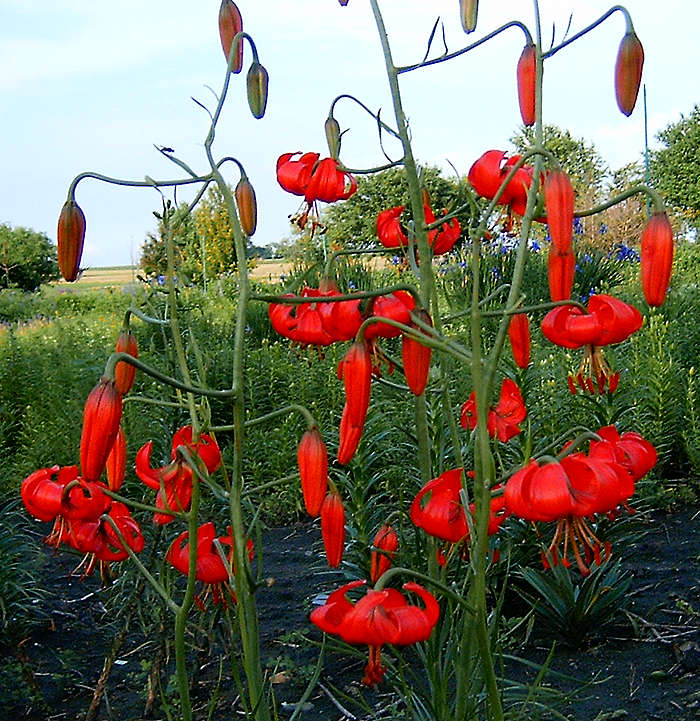
'CORAL LILY'. Fragrant bright scarlet 2" flowers with reflexed petals, in racemes of up to 20, on stems to 1 1/2 feet. Siberia and E. China. Zone 4. Germinates in 2 - 5 weeks. Bulbs edible. "Another beautiful meadow lily, always first of our species to bloom."—Bertrand.
LUPINUS
—Lupinus densiflorus v. aureus. (100) LUP-12A. Packet: $2.00
Ounce: $6.00
1/4 pound: $18.00
'YELLOW LUPIN'. Dense spikes of yellow flowers tinged red. Hardy annual to 2 - 3 feet. California. Soak, nick hard, to germinate in 1 - 4 weeks.
LYCHNIS
—Lychnis Coronaria. (=Agrostemmma Coronaria) (500) LYCH-10. Packet: $2.50
5 grams: $18.00
Click for photo »
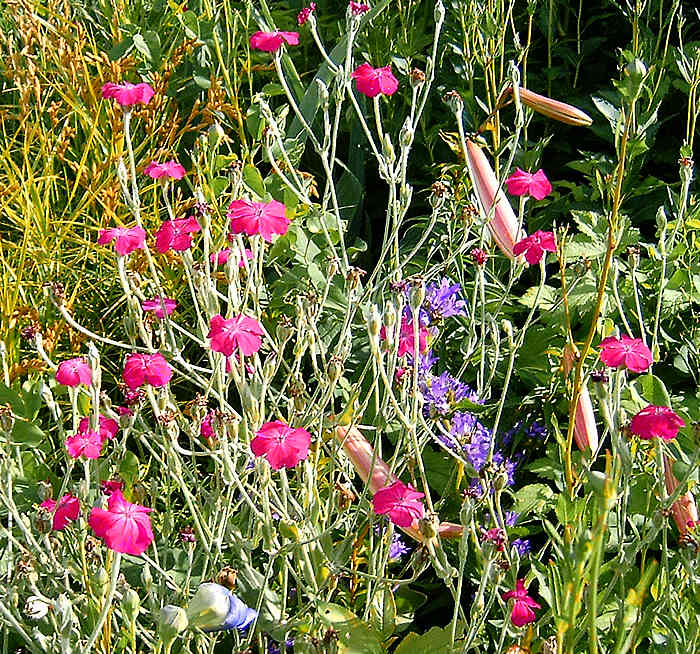
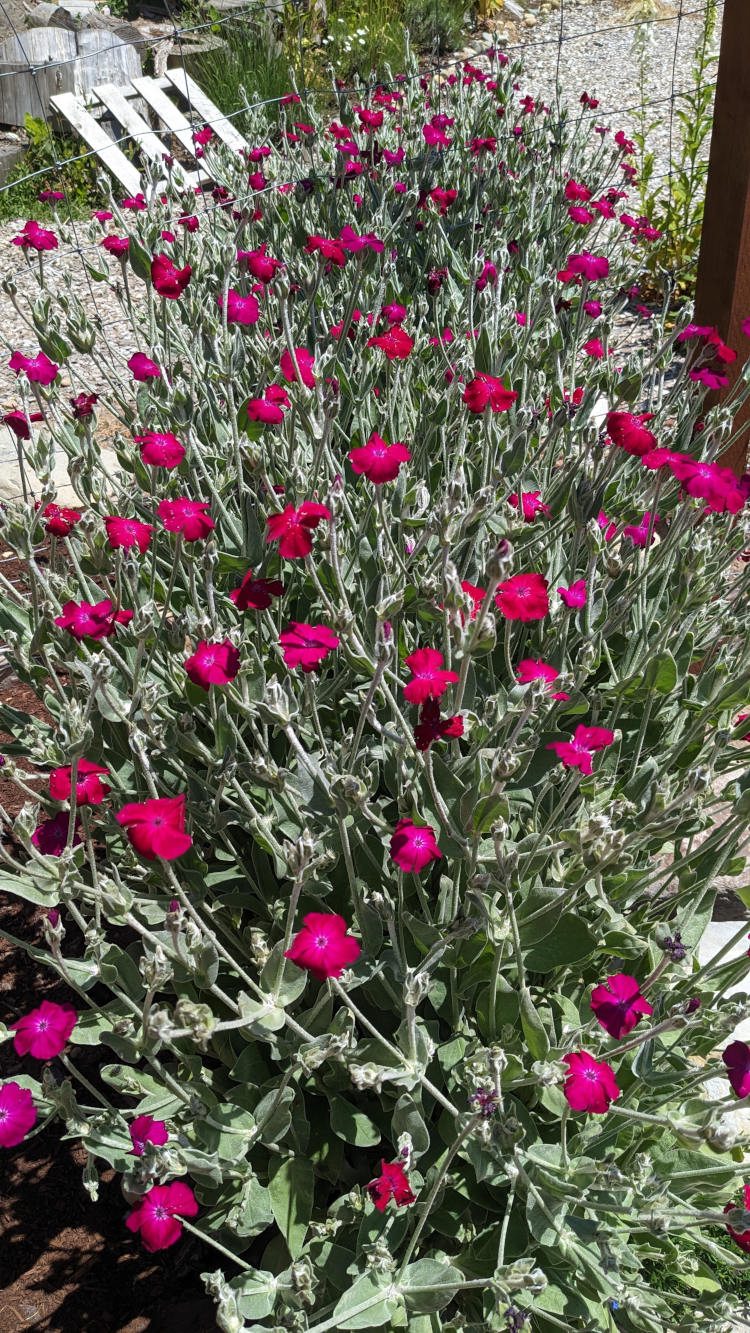
'ROSE CAMPION', 'MULLEIN PINK', 'DUSTY MILLER'. Large rose-crimson 1 1/2" wide flowers borne singly on stems held above the densely white-woolly foliage. Hardy biennial or short-lived perennial to 1 1/2 - 3 feet, forming dense tufts. Eurasia. Zone 4. "The glowing flowers and white foliage make it a conspicuous plant."—L. H. Bailey. Good in masses.
—Lychnis Viscaria. (1000) LYCH-30. Packet: $2.50
Click for photo »
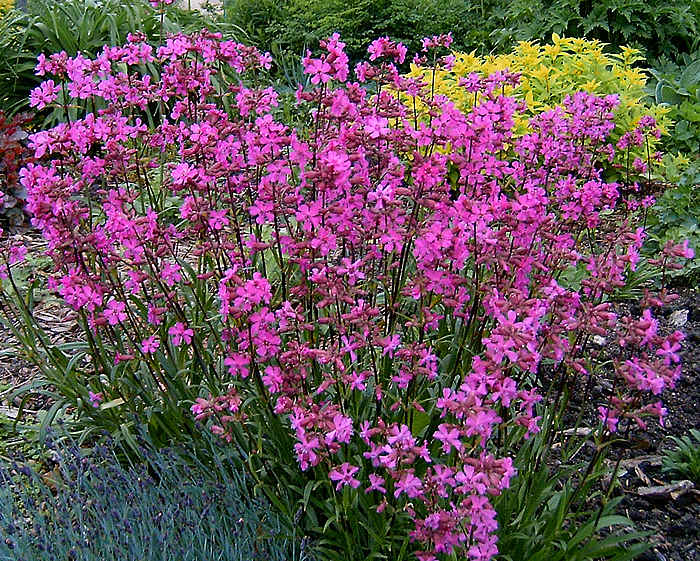
'GERMAN CATCHFLY'. Rose-pink flowers in clusters of 3 - 6 blooms. Hardy tufted perennial to 1 - 3 feet, with narrow leaves. Europe to Siberia. Zone 3. "A most profuse bloomer in sunny areas."—Bailey.
LYCIUM (LEE-see-um)
SOLANACEAE. 'MATRIMONY VINE', 'BOXTHORN'. Ornamental shrubs, often clambering, or with graceful, arching branches. Valued for their funnel-shaped flowers and bright scarlet berries. Good for hedges, wildlife habitat, erosion control, food and medicine. Some of the 100 or so species are hardy in the North, and the pendant types are especially attractive cascaded down a wall. Good by the seaside and for fixing sandy banks. Easily grown.
—Lycium chinense. (100) LYCI-12. Packet: $2.50
5 grams: $7.50
'CHINESE WOLFBERRY', 'KUKO', 'KO-CHI'. Purple half-inch flowers June to September, followed by attractive scarlet 1/2 - 1" long berries, August to October. Graceful arching shrub to 12 feet, with bright green 1 1/2 - 3" oval leaves. E. Asia. Hardy in the North, Zone 5, and "It is a splendid sight in autumn gardens, when its slender branches are laden with scarlet berries."—Yashiroda. These branches are much valued in Japanese flower-arranging. Germinates in 1 - 4 weeks. The young leaves are eaten in salads or boiled with rice as flavoring, and are also drunk as tea. The berries are eaten and a medicinal wine is made from them. Leaves, root and fruit are all highly valued in Chinese medicine, as "prolonging life, improving the complexion and brightening the eye."—Pen Ts'ao.
—Lycium ruthenicum. (100) LYCI-72. Packet: $2.50
5 grams: $10.00
https://commons.wikimedia.org/wiki/Category:Lycium_ruthenicum Photos in habitat.
https://pmc.ncbi.nlm.nih.gov/articles/PMC10574788/ Huge overview of medicinal properties.
https://academic.oup.com/fqs/article/4/4/193/5893636?login=false Chemistry, medicine, and proper tea preparation.
'BLACK GOJI'. Pale violet flowers followed by round black berries. Hardy shrub to 1 - 6 feet, with small succulent leaves. Central Asia. Zone 5. Stands cold, heat, sandy soil. Used in traditional Chinese, Tibetan, and central Asian medicine. Higher in medicinal compounds than red goji, it is used for many ailments, anti-aging, antioxidant, anti-tumor, anti-radiation, and immune stimulating. Germinates best with 250 - 500ppm GA-3.