In several remote areas of the Mojave and Colorado Deserts a curious custom has developed. Isolated roadside trees will become festooned with shoes and other objects, placed in them by young people from the nearest local communities, and occasionally by travelers. These shoes will often have messages painted on them, sometimes just the name of the person and the date, sometimes declarations by youthful couples of their love.
If you know of the locations (even approximate) of other shoe trees, please let us know. We would like to document them.
The most well-known of these trees was a large saltcedar (Tamarix sp.) found in the Colorado Desert on Highway 62 about 30-some miles (50 km) west of Parker, Arizona (population about 2900):
Click for photo »
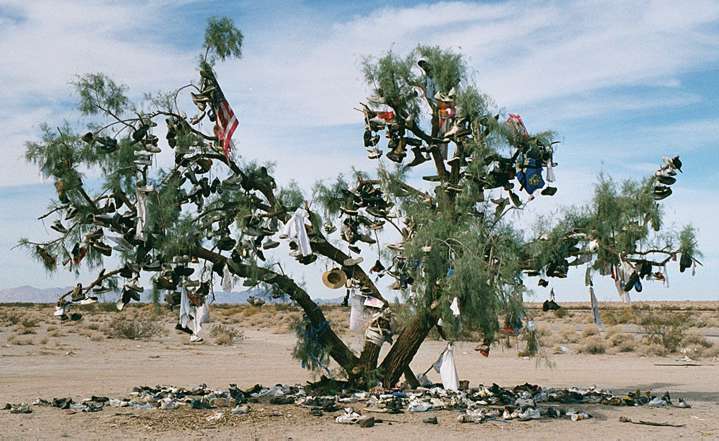
Originally, the tree contained only shoes; over the years, other pieces of clothing appeared, and after 11 September 2001, a few flags showed up. We visit this tree every year, and were dismayed to find it burned in May 2003:
Click for photo »
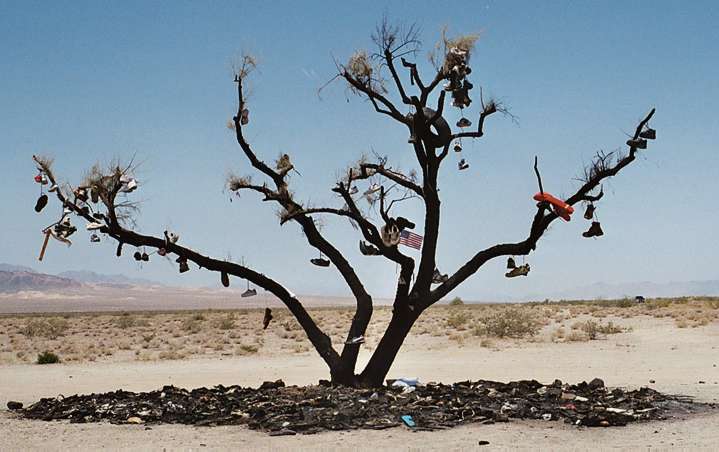
It had been burned about a week before the picture was taken, but as you can see, new shoes had already been placed in it. Inquiries made in Vidal Junction and Parker found that local people were dismayed at this vandalism, and that the local sheriffs had investigated.
The tree survived - a visit in November 2003 found many new shoes in the remains of the tree:
Click for photo »

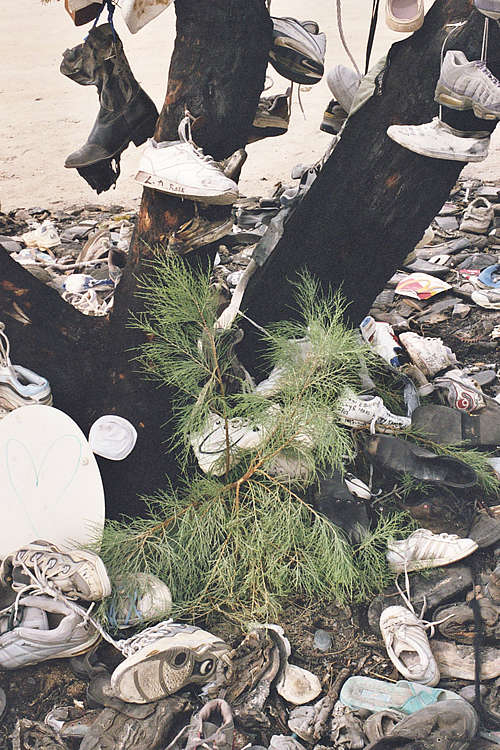
And new growth beginning (note the messages written on some of the shoes):
Click for photo »
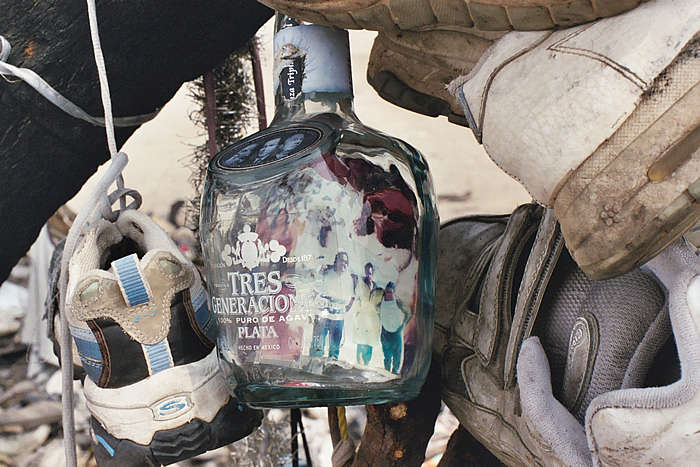
Someone left photos in a bottle, hung from the tree:
Click for photo »
We visited the tree again in September 2004, and found it now completely burned and dead, with old car parts and the remains of tires that had been burned at the base:
Click for photo »
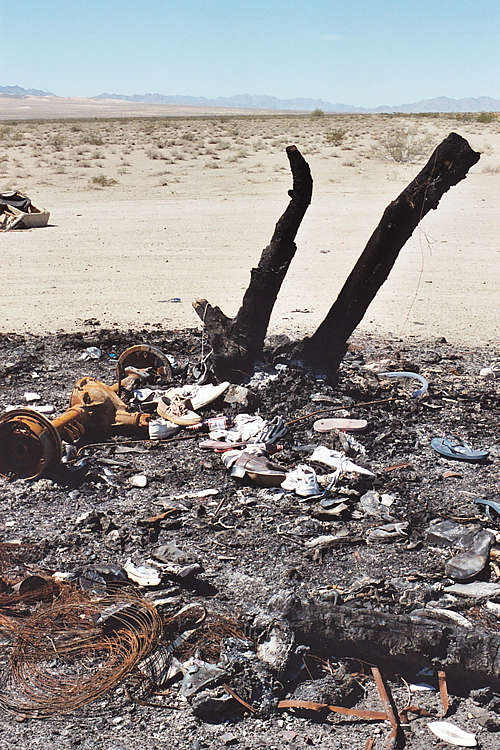
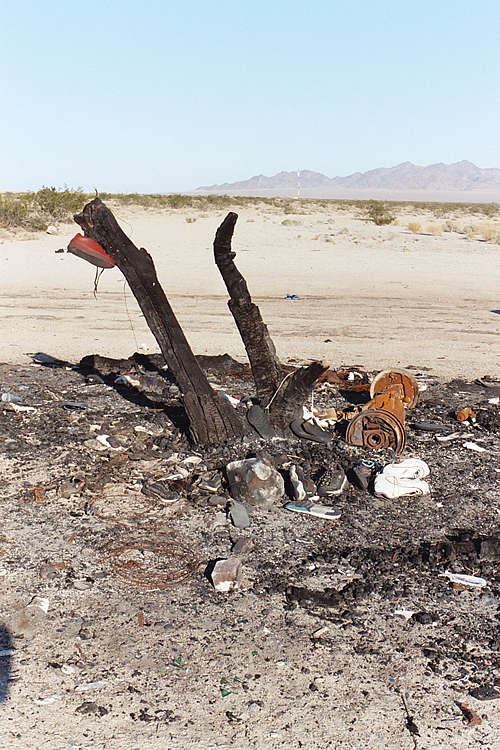
Although only the stump remained, one week later, new shoes had been placed on it:
Click for photo »
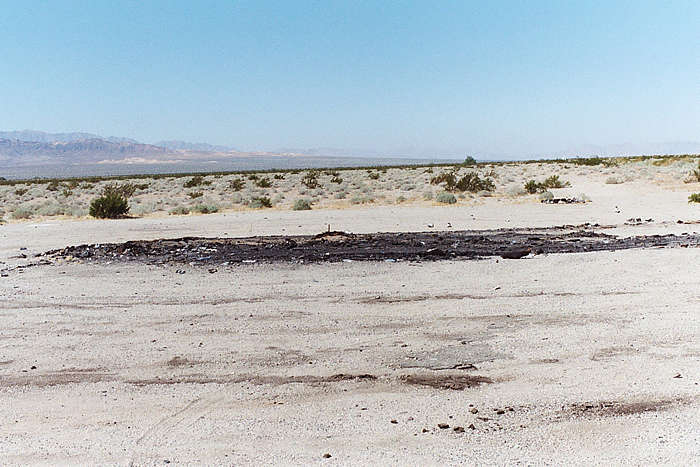
One year later, in September 2005, the stump had been bulldozed out:
Click for photo »
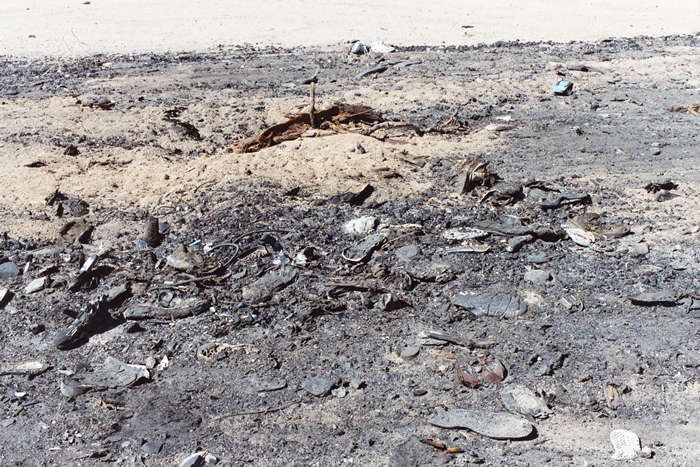

A new shoe tree was begun some miles down the road from the burned one:
Click for photo »
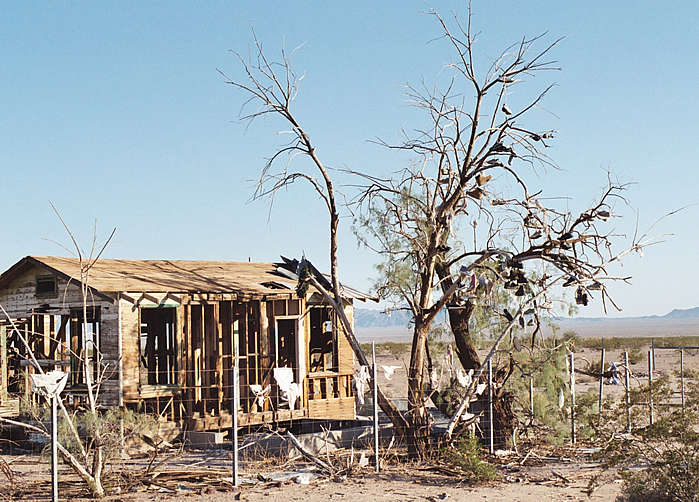 (September 2004)
A year later, in September 2005, the cabin had been burned:
Click for photo »
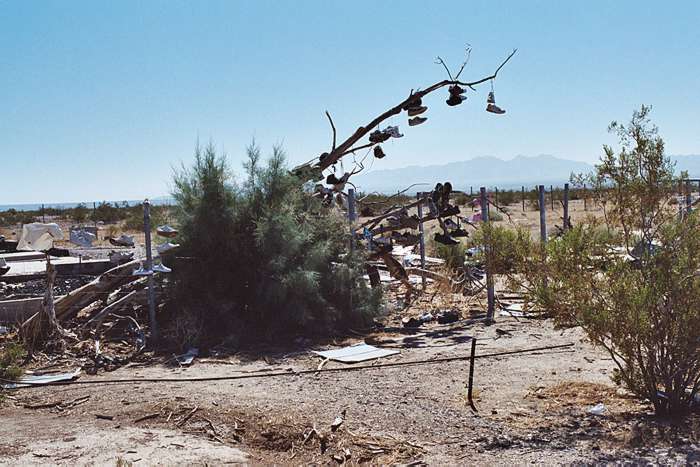
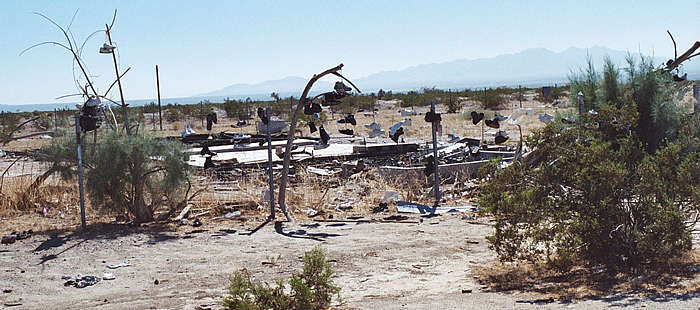
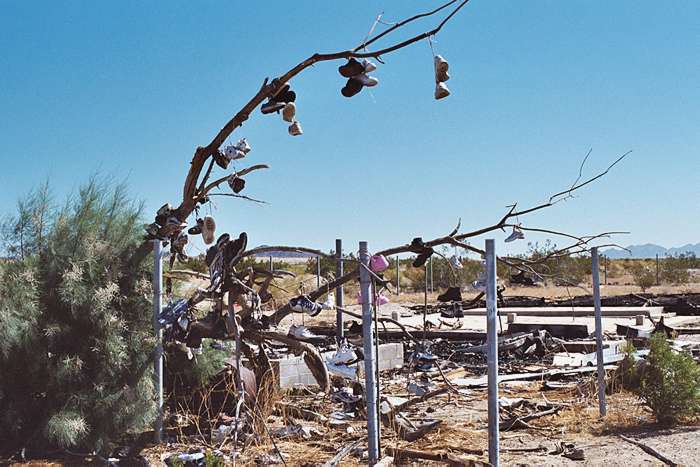
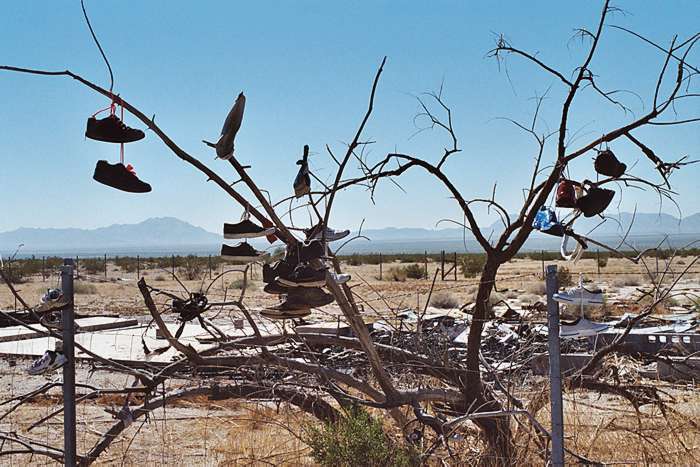
As you can see, the new shoe trees are sprouting from the base.
Another new shoe-tree is being made on Highway 62 at Mission Creek Road, west of Joshua Tree National park:
Click for photo »
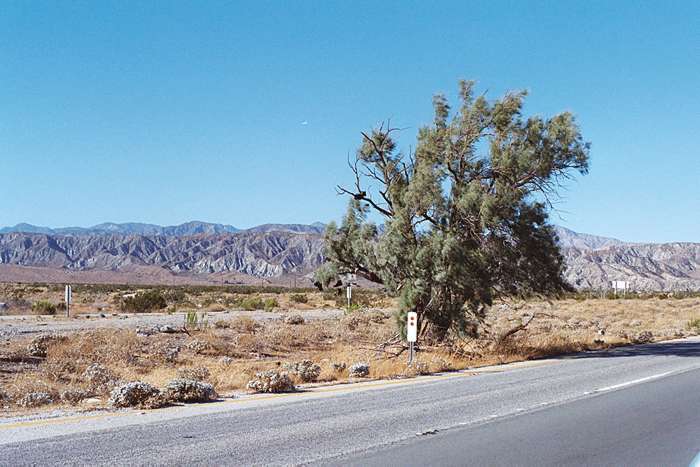
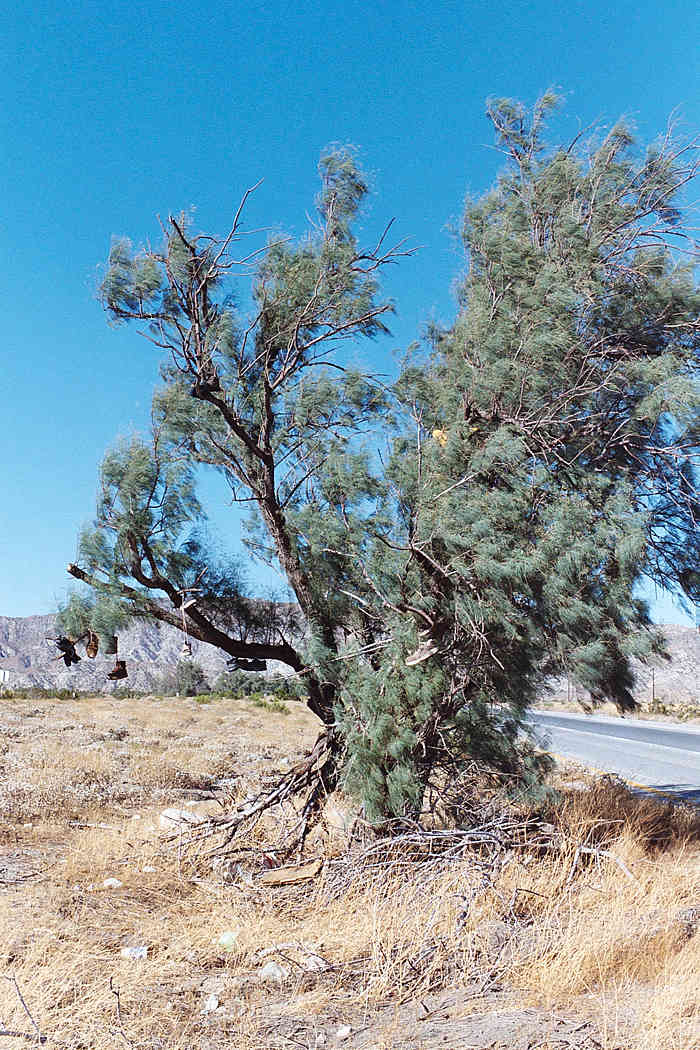
Another shoe-tree is a Palo Verde (Cercidium), that exists in a far more remote area of the Mojave Desert. This tree is about 60 miles (100 km) from the nearest town:
Click for photo »
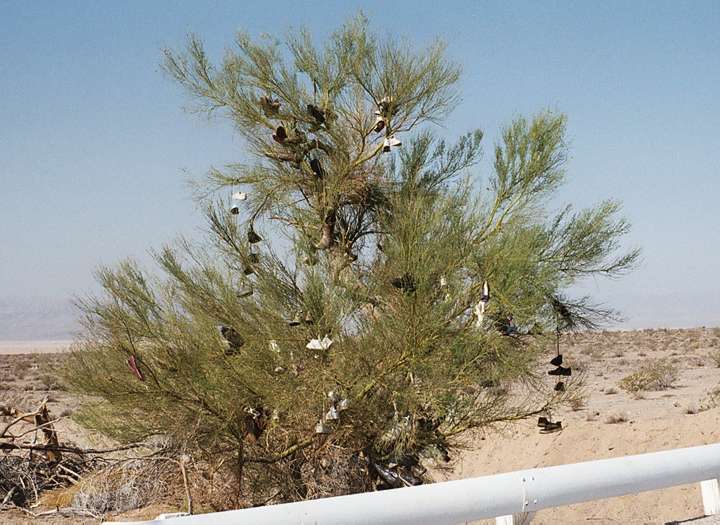
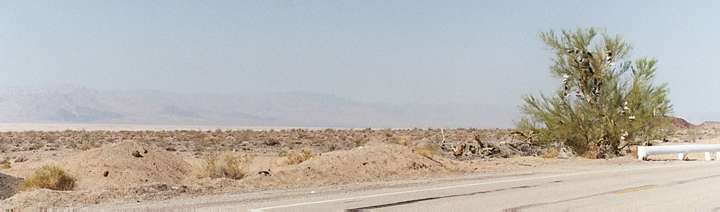
The shoe-tree habitat - this is a very remote area: Click for photo »
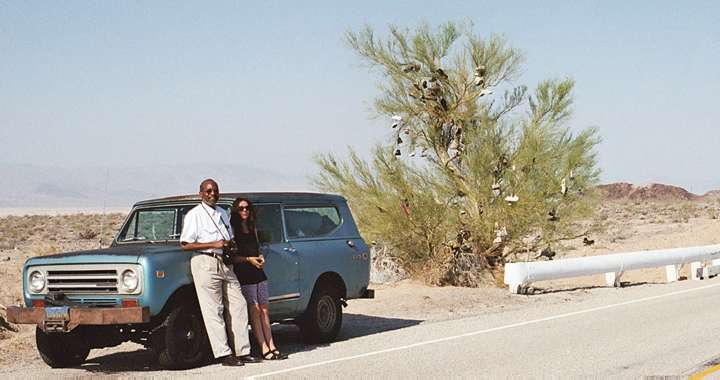
Sheri Calkins and our friend, anthropologist Dr. John Rashford, when we were visiting the shoe-tree in May 2003:
Click for photo »
This custom is reminiscent of the "rag-trees" of the Middle-East, which are sacred trees in which people place rags or bits of clothing for various purposes, including healing, prayers, pacifying the tree's spirit, pacifying ancestral spirits, as votive offerings, asking for the tree's help, and such. For an interesting discussion of this custom, see:
Dafni, A. 2002. Why are rags tied to the sacred trees of the holy land? Economic Botany 56:4, 315 - 327
Rag-trees have been recorded from the Siberian tundra, Afghanistan, India, Sudan, Kenya, West Africa, Zimbabwe, Israel and throughout North Africa and the Middle-East, Iran, Cyprus, Turkey, Italy, Britain, Scotland, México, Patagonia, Japan, and elsewhere. Several modern religions have banned, or frown upon the practice. The shoe-trees of California and Arizona appear to be a spontaneous manifestation of this ancient human urge.
We find visiting these remote trees a moving experience. We encourage respect for these trees and are opposed to those who vandalize them.
Back to Cercidium.